

How to Make Pie Crust in a Food Processor
Homemade pie crust doesn’t have to be complicated! This food processor pie crust is a quick and easy way to make flaky, all-butter pie dough with a lot less effort than making it by hand. It’s a great shortcut when you want homemade pie crust without all the extra work.

Recipe overview: Food processor pie crust
- Quick and easy to make. The food processor does most of the work of cutting the butter into the flour and bringing the dough together. No pastry blender needed!
- Flaky, buttery results. Cold butter and minimal mixing help create a tender, flaky pie crust that’s full of buttery flavor.
- Follow my clear steps. I give cues and tips so you know exactly what the dough should look like each step of the way.
- Makes two 9-inch pie crusts. Use for one double-crust pie or two single-crust pies. Pie crust also freezes very well!
- Perfect for sweet or savory pies. Use the optional sugar for dessert pies, or leave it out when making something savory.
There are times when I just don’t have the energy or patience for traditional pie crust. I need a shortcut so I can get it done fast and move on to other things. Food processor to the rescue!
I use this method most of the time now when I make homemade pie crust, and have been for years. And it still delivers! This pie crust is every bit as flaky and delicious as pie crust made a more traditional way.
And if you’d rather make your pie crust by hand, I also have a foolproof flaky pie crust recipe that walks you through that method.
“Absolutely perfect crust. I am 70 years old. This is the easiest recipe I have ever used. Goodbye premade refrigerated crusts! ⭐⭐⭐⭐⭐” —from reader Arliene
Ingredients you’ll need

- All-purpose flour: Be sure to measure flour correctly using the spoon and sweep method, or use a kitchen scale for the most accurate results.
- Cold butter: I prefer salted butter for the extra boost of flavor, but unsalted works too.
- Granulated sugar: Optional, but I like to include it when making pie crust for sweet dessert pies. Leave it out for savory recipes.
- Salt: Adds flavor.
- Ice-cold water: Start with the amount listed in the recipe and add more only if necessary.
You’ll also need a food processor fitted with the standard S-shaped metal blade. I recommend a 10-cup food processor, though a 7-cup model will also work.
Substitutions and variations
Try buttermilk instead of water. For even more flavor, you can replace the water with buttermilk. This is the method I use for my buttermilk pie crust, and it’s especially delicious with fruit pies!
How to make pie crust in a food processor, step by step


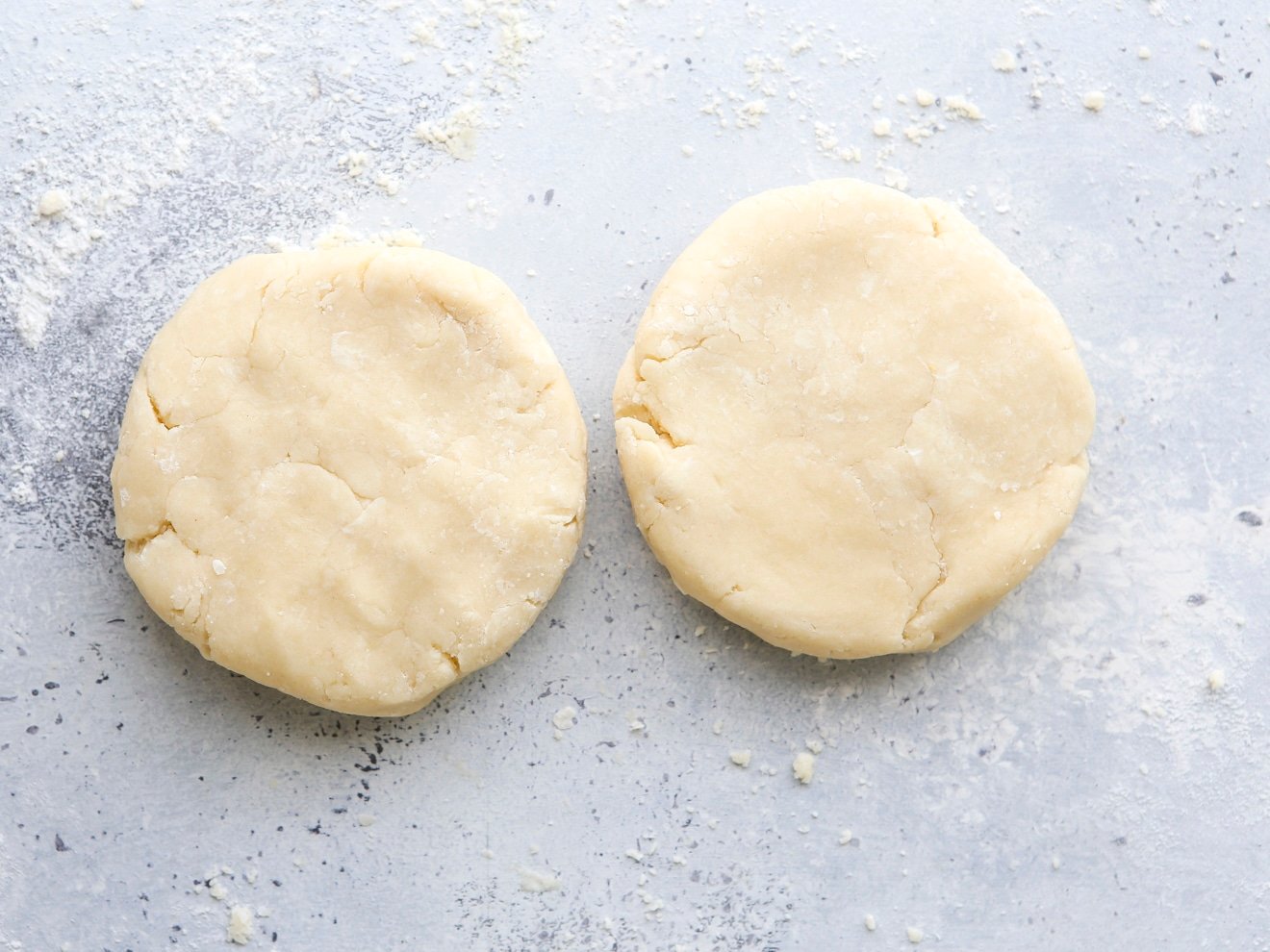
Annalise’s expert tips
- Keep everything cold. Cold butter is key to a flaky pie crust! Work quickly so the butter doesn’t soften too much while you’re making the dough. If it starts to feel warm or sticky, pop it in the fridge for 15 minutes.
- Don’t overprocess the dough. This is the biggest mistake to avoid when making pie crust in a food processor. Stop when the mixture is still crumbly but holds together when pinched. Don’t let it form a ball in the food processor! You want to leave some visible pieces of butter in the dough, which help create flaky layers as the crust bakes.
- Add extra water by hand. The dough may look too dry when you first remove it from the food processor, but try bringing it together with your hands before adding more water. If needed, sprinkle in additional cold water 1 tablespoon at a time. It’s much easier to control the moisture this way and avoid adding too much.
- Measure flour carefully. Too much flour can make the dough dry and difficult to work with. I recommend using a kitchen scale, but my spoon and sweep method works well too.
- Don’t rush chilling the dough. Resting the dough in the fridge allows the flour to fully hydrate and the butter to firm up again. It also helps relax the gluten so the dough is easier to roll out and less likely to shrink during baking.
Food processor pie crust FAQs
I recommend a 10-cup food processor for this recipe because there’s plenty of room for everything to mix evenly and quickly, but it should be a 7-cup minimum food processor. Use the standard S-shaped metal blade, not a plastic dough blade.
You probably added too much water, or the butter has become too warm. The dough should hold together without feeling wet or sticky. If it starts getting too soft, wrap it up and refrigerate for about 15 minutes before working with it again. Next time, be careful not to add more water than you need.
Absolutely! Pie dough is great for making ahead. Wrap the disks tightly in plastic wrap and store them in the fridge for up to 3 days. For longer storage, double-wrap the disks in plastic wrap and freeze for up to 2 months. Thaw overnight in the fridge before rolling out and using as directed.

More pie recipes and baking help
And if you need help rolling out your dough, preventing a soggy bottom crust, or troubleshooting other pie problems, don’t miss my 8 tips for making perfect pies.
Have you tried this recipe? I’d love to hear about it! Leave a rating and review below, or take a photo and tag it on Instagram @completelydelicious.
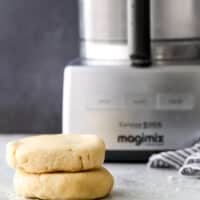
How to Make Pie Crust in a Food Processor
Ingredients
- 2 ½ cups (312 grams) all-purpose flour , measured correctly
- 1 tablespoon granulated sugar (optional)
- 1 teaspoon salt
- 1 cup (226 grams) butter , cold and cubed
- ⅓ cup (75 grams) ice cold water
Equipment
Instructions
- Put the flour, sugar (if using) and salt in a large food processor (at least 7 cup capacity) fitted with the metal blade and pulse a few times to combine. 2 ½ cups (312 grams) all-purpose flour, 1 tablespoon granulated sugar, 1 teaspoon salt
- Add the cubed butter and quick pulse 3-5 times until butter is broken up and the smallest pieces the size of large peas. It's okay if you still have some larger pieces.1 cup (226 grams) butter
- Begin to gradually add ⅓ cup water through the top access of the food processor, then turn it on and add the rest of the water while it's running. Continue processing until the mixture begins to come together, but stop before it forms a complete ball. It will look a little crumbly at this point but actually holds together when you pinch it. (NOTE! The food processor will actually start to make a different sound when the dough starts coming together and will get much louder. When it does, you're done. This whole step should take less than 10 seconds total! Don't over mix.)⅓ cup (75 grams) ice cold water
- Turn the dough out onto a clean surface and form into 2 equal disks with your hands. If the dough won't come together as you work it, add more cold water 1 tablespoon at a time, sprinkling it over the dough (do this sparingly as too-wet dough makes for a tough crust).
- Once formed into disks, cover in plastic wrap and chill in the fridge for at least 1 hour, preferrably 2 hours, and up to 3 days. Pie crust also freezes very well, up to 2 months. Double wrap in plastic wrap to prevent freezer burn, and thaw overnight in the fridge before using.
- Use pie crust as desired with your favorite pie recipes!
Notes
- Yield: Makes two 9-inch pie crusts (for 2 single crust pies, or 1 double crust pie).
- Measuring flour: All recipes are tested with the “spoon and sweep” method. For most accurate results, use a kitchen scale and follow gram measurements.
- Salted vs unsalted butter: I use salted butter now for most baking recipes, including this one, but either will be fine. If using salted butter, you may choose to reduce salt amount to ½ teaspoon, but I leave it at the full 1 teaspoon for maximum flavor.
- Replace water with buttermilk for more flavor: My buttermilk pie crust variation replaces the water in this recipe with ½ cup buttermilk. No other changes to this recipe are required for this swap.
- Making other pie crust recipes in the food processor: I have only used this method for traditional all-butter pie crusts. It’s possible that other types of pie crust and recipes will have different results.

Note: This tutorial was originally published in 2020. While the recipe and method remain the same, instructions have been expanded and improved for more clarity.
Looking forward to making this pie crust. Love the idea of using the food processor.
Easiest, tastiest, way to make a pie crust dough, something I’ve never been able to do! I made my first chicken pot pie Thank you!
You’re so very welcome! I’m so happy to hear this method worked so well for you. Thanks for the comment and rating!
Did anyone find the 1/3 c of water wasn’t nearly enough?
You can always add a little water 1 teaspoon at a time if you need extra help getting the dough to come together. But sometimes all the dough needs is just a few more pulses with the processor!
Your pictures helped me so much!
I’m so glad, thanks for the feedback!
Thanks, I used to make pie crust this way a long time ago and I needed a refresher. Im good for Thanksgiving now!!
Pat Brady
So happy to hear that Patricia, it’s such a great way to make pie crust!
BE VERY CAREFUL IF DOUBLING!!
The recipe widget offers the ability to 2x the recipe, but only the bold ingredient measurements get doubled, and I use the metric system so I read the ml and gram conversions instead, and *they were not doubled*.
I figured something was wrong and doubled the water, but the pastry is made and rolled and now I see that I should have used twice the butter that I did…. don’t know how it will turn out, but we’re committed now! 😛
I am currently in the process of updating my recipe cards to fix this issue. That kind of functionality didn’t exist when this recipe was originally written and I have hundreds of recipes, so it is not a quick fix. I’m so sorry for the confusion!! I’ll get this one done asap.
Great recipe and so glad to find something reliable that does not require any hand mixing!! One point: when I converted the recipe from two crusts to one, the updated version did not reduce the metric measures. I was mixing the ingredients and thought 80 ml of water looked like a lot – I rechecked the recipe and discovered this issue. All the imperial measures are reduced, just not the metric. Thanks!
Hi Annalise,
just wanted you to know that my pie crusts turned out great with this recipe. But I did have to add about twice the water to make the dough come together. I weighed both the flour and water. Is there a certain flour that you recommend using? I used Gold Medal All-Purpose Unbleached Flour.
Absolutely great. My go to recipe.
can i use frozen butter
Sure
Help!! Mine came out sticky! What did I do wrong, chilled. I did use ice water only 3 tablespoons are very sticky. How can I fix this?
Hi Gail! Sorry it’s sticky. It could be that it was processed too long? Or it could have been a measurement error. You can try to add flour as you shape the dough disks, and again when you roll out and see if that helps. You can also always try again and start over, but I know that’s such a bummer.
nice
Absolutely perfect crust. I am 70 years old. This is the easiest recipe I have ever used. Goodbye premade refrigerated crusts!
can you us the none stick butter for a pie crust
Thank you hope it works