

How to Make Foolproof Flaky Pie Crust
Welcome to my foolproof flaky pie crust recipe, where I’ll guide you through creating a perfect all-butter pie crust that’s easy to prepare and practically impossible to mess up. If you’re looking for the best flaky pie crust recipe that anyone can make, this is it!

This flaky pie crust is my go-to for all of my pie baking and I’ve probably made it hundreds of times over the last 10+ years. I know there are a lot of recipes and opinions out there when it comes to pie, but this is the crust that never fails me.
It’s not just very flaky and tender, but it’s also full of delicious buttery flavor all on its own. Combine this pie crust with your favorite filling and I promise it will be a tasty match made in heaven! And if making pies intimidates you, this tutorial is a great place to start.
“I’ve always had a hard time getting a flaky pie crust, and this recipe is now my go-to. Delicious!!!” — from reader Marisa
“Ever since I found your sheeting technique several years ago, I’ve made all my crusts this way. I’ve used it for sweet/dessert pies, chicken pot pies, hand pies, and my favorite…pie crust cookies. The crust comes out so flaky and tender every time. Thanks so much!” — from reader KDub
Pie crust ingredients

Let’s get started! For the most basic butter pie crust, you need just 4-5 simple ingredients (view the full recipe below):
- All-purpose flour
- Butter
- Granulated sugar (optional, for sweet/dessert pies)
- Coarse salt
- Cold water
Give your pie crust a flavor boost! My favorite way to make this recipe is with buttermilk instead of water. So much flavor and it adds a touch of tenderness to the flaky layers! Click here to see my buttermilk pie crust variation.
baking tip:What causes flaky layers in a pie crust?
How to make homemade pie crust
There are three ways I know of to make pie dough:
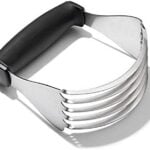
- With a pastry blender, using it to cut the butter into dry ingredients. This is probably the most common method.
- Using a food processor, which works great, especially if you’re short on time.
- By rolling out the butter into the dry ingredients, the method I’m going to show you here.
These are all fine options! But I want to show you how rolling the butter into the dry ingredients is a guaranteed way to get the perfect flaky pie crust. This method takes a little bit more time and effort, but only about 5 additional minutes, and it works!
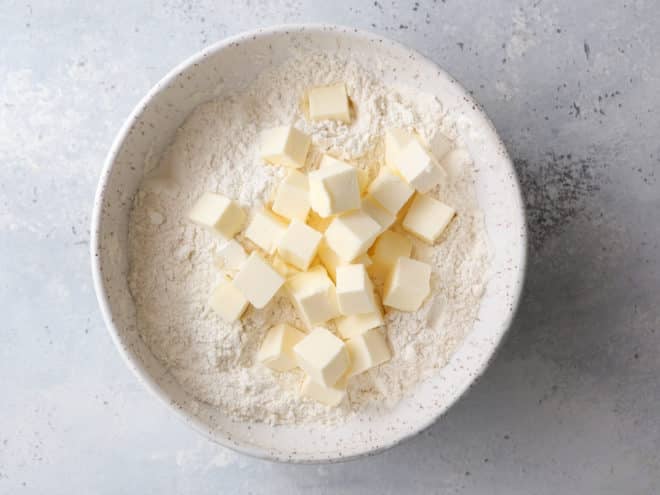
Step 1— Combine dry ingredients and add butter
Combine the flour, salt and sugar (if using) in a bowl and add the cold butter cubes. Toss until all the butter is coated in flour.
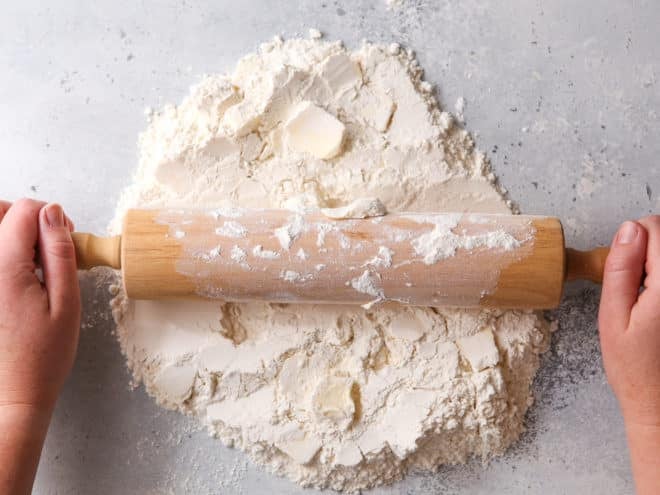
Step 2— Roll butter into dry ingredients
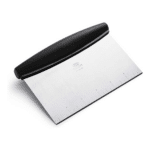
Dump everything out onto a clean surface. Use a rolling pin to flatten the butter cubes and roll them into the dry ingredients. A bench scraper is handy to bring it all back together into a pile, and also to remove butter from the rolling pin as needed.
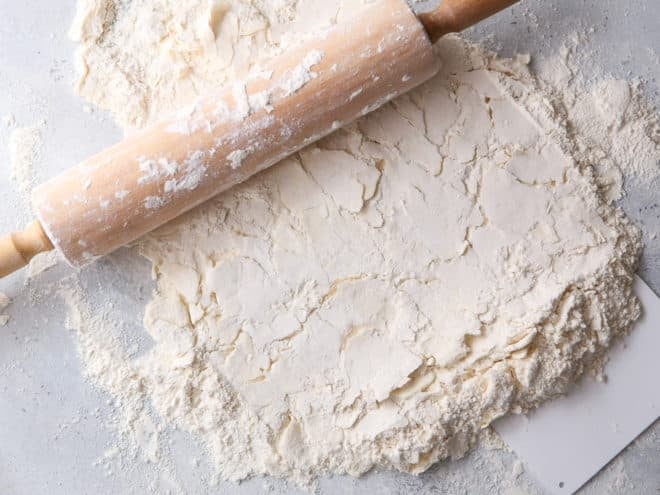
Keep rolling until all of the butter has been rolled into the dry ingredients (yes, this get’s quite messy!). The goal is to have thin sheets of butter visible throughout the dry ingredients. Break up any really long sheets of butter with your bench scraper.
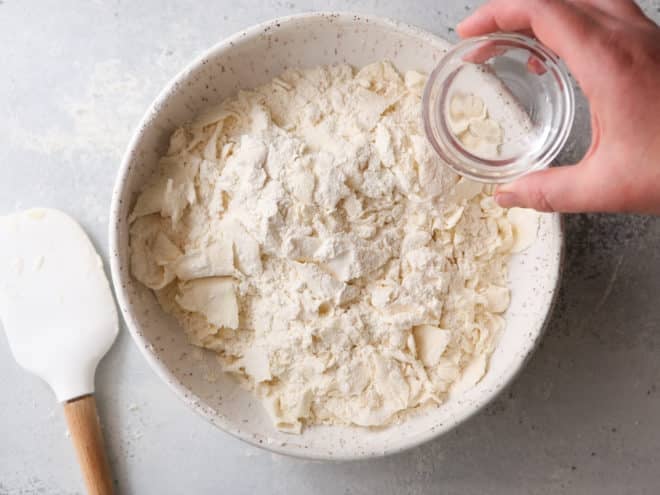
Step 3— Add ice water
Gather up the mixture and return it to the bowl. Place the bowl in the freezer for a few minutes if needed, just to get everything cold again. Then, make a well in the center and add about 2-3 tablespoons of cold water (or buttermilk if using that variation).
Use a large spoon and then your hands to bring the mixture together into a ball. If necessary, add more cold water 1 tablespoon at a time. I always need to add more water, anywhere from ¼ cup – ½ cup total, but it’s different every time and so I start with a small amount and slowly add more. Adding too much water will make the dough sticky and produce a tough crust.
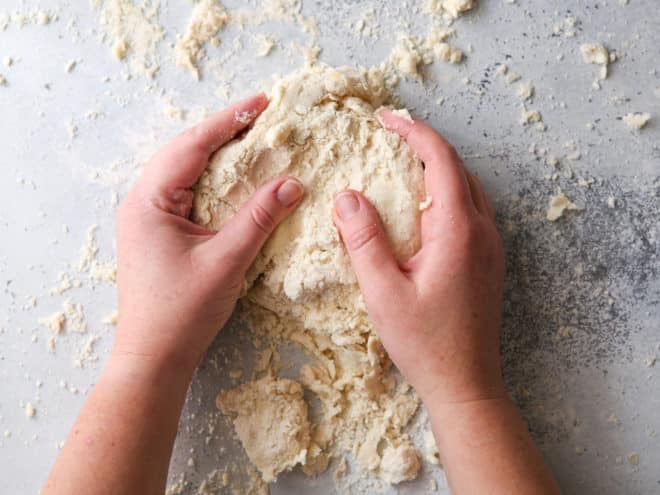
Step 4— Form dough into disks
The dough should hold together in a ball, but a few loose crumbs are okay. I like to dump the mixture out onto a work surface to bring the dough together with my hands. You don’t want to over-work it, but a little kneading and handling is just fine.
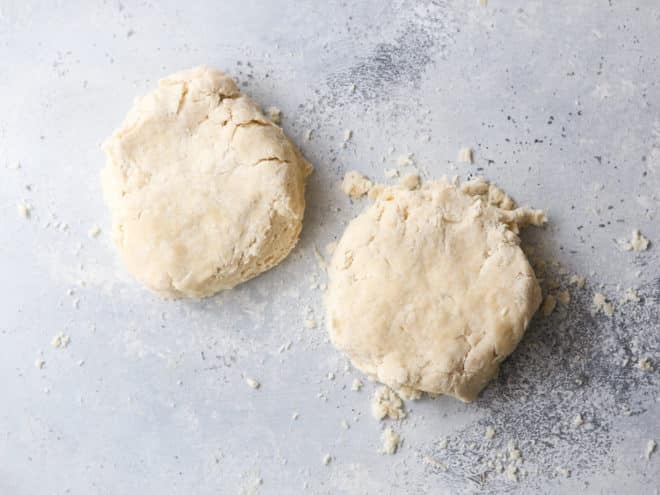
Divide the dough in half and flatten each into a disk. Cover with plastic wrap and chill in the fridge for at least 2 hours. Then, you’re ready to bake a pie!
How to roll out pie crust
- Let dough rest at room temperature for 5-10 minutes on a lightly floured surface.
- Use a rolling to begin rolling out the disk. This may be hard at first while it’s thick and cold, but move from the center outwards and it should take shape.
- Every few rolls, rotate the dough a quarter turn on your surface and add more flour if needed.
- Keep rolling until it’s the size you want and evenly thin. Encourage the dough into a circle, and reshape with your hands if needed or if the dough cracks.
- Roll the pie crust up onto your rolling pin and transfer it to a pie plate, then use it according to your pie recipe’s instructions.

Pie crust tips for success!
- The bigger the butter chunks, the flakier your pie will be. So don’t be afraid to leave larger pieces throughout.
- Keep ingredients and dough cold. In order to get those flaky layers, the butter needs to stay separate from the flour. Start with cold butter and water, chill the dough mixture as needed while you’re working with it, and rest the dough in the fridge before rolling it out.
- Cut this recipe in half for a single-crust pie. Or you can freeze the second disk of dough for another time.
- Use an egg wash. In order to get a shiny golden crust once baked, brush the dough with a simple whisked mixture of 1 egg + 1 tablespoon of water.
- Pie crust storage: Pie crust dough will keep in the fridge up to 5 days and in the freezer (double-wrapped) for up to 2 months. Thaw overnight in the fridge.
- Make pie crust ahead of time: It’s easy to do and a great time saver! For example, I usually make pie crusts for Thanksgiving 1-2 weeks before so it’s one less thing to worry about in the busy days before the holiday.
My favorite pies to make with this pie crust
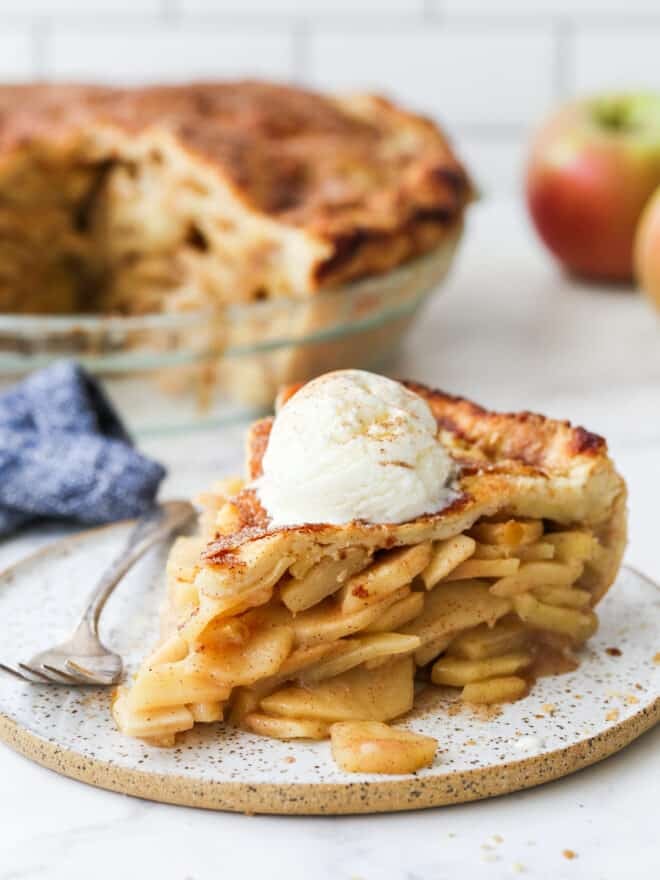

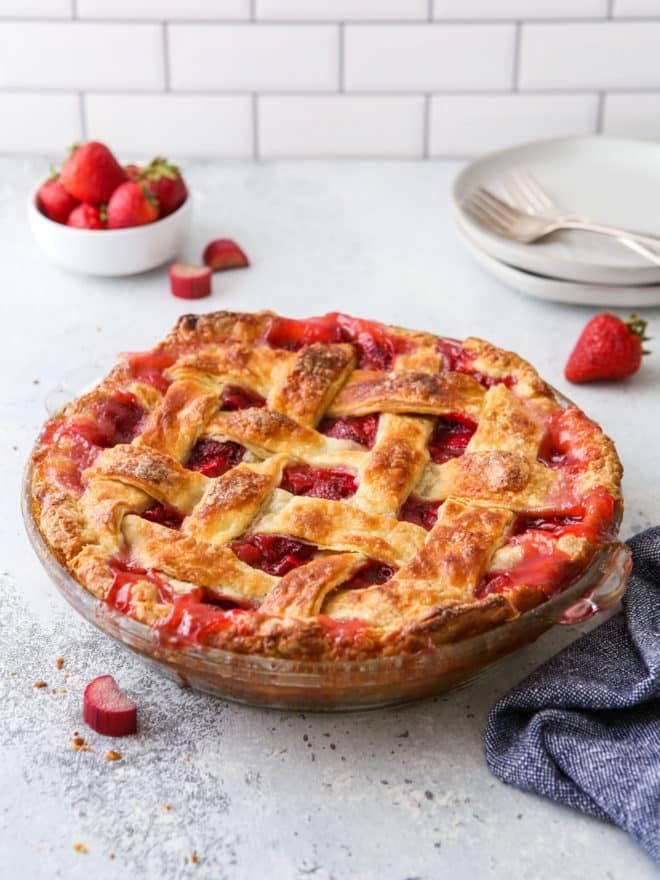
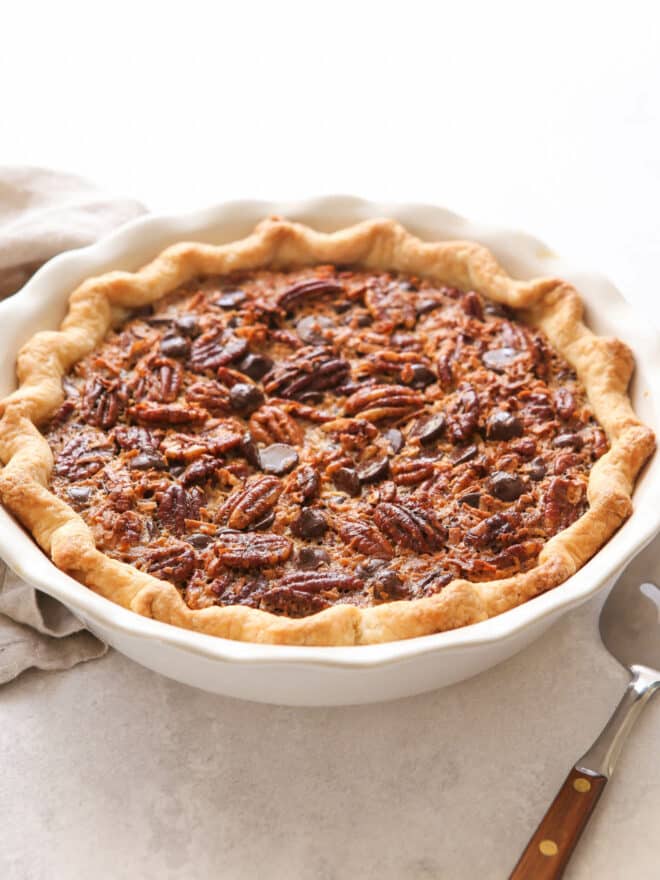
Get the best pie crust recipe

The Best Flaky Pie Crust
Ingredients
- 2 ½ cups (300 grams) all-purpose flour
- 1 tablespoon granulated sugar , optional
- 1 teaspoon salt
- 1 cup (226 grams) unsalted butter , cold and cut into cubes
- ¼-½ cup (56-113 grams) ice cold water , as needed (see Notes)

Instructions
- Combine the flour, sugar (if using), and salt in a bowl. Add the cubed butter and toss to coat.
- Dump the mixture out onto a clean surface and use a rolling pin to roll the butter into thin sheets, combining it with the flour. Use a bench scraper to scrape the rolling pin and to bring the mixture back into a pile as necessary. Continue until all of the butter is incorporated into the flour. Mixture will be very flaky.
- Return mixture to the bowl and place in the freezer for 10 minutes to chill the butter.
- Remove from freezer and add ¼ cup of the ice cold water. Use a spoon and then your hands to stir the mixture until it comes together into a ball. If mixture is too dry, add additional water a tablespoon at a time. I usually end up needing slightly more than ¼ cup but it varies each time. It's okay if some dry bits remain, but you should be able to shape the dough together.
- Divide the dough in half and flatten into 2 disks. Wrap each disk in plastic wrap and chill in the fridge for at least 1 hour (2+ hours preferred) and up to 5 days.
- To freeze pie crust, wrap in double layers of plastic wrap and store in the freezer for up to 2 months. Let thaw overnight in the fridge before using.
Video
Notes
- Makes enough dough for one double crust 9-inch pie. Recipe can be cut in half for a single crust pie.
- You can find my buttermilk pie crust variation here. It’s my favorite for fruit pies! If you use buttermilk instead of water, know that you will need closer to ½ cup.
- If you’re looking to speed things up, check out my tutorial on how to make pie crust in a food processor here.

This is truly a yummy Pie crust. I have used it for desert pie and chicken pot pie
This was so easy to make and I even messed up the ratios a little but it still turned out delicious!
I use this recipe and method every single year without fail. It is the best!
I have had trouble with all butter pie crusts since coming into favor. I follow the recipe fully and when baking all the butter oozes out. The crust can be lifted out in one piece and is on the verge of being burnt after the allotted time. Please help before I try your recipe! The first time I made an all butter crust I wasn’t expecting all the butter running out and creating billowing smoke coming from my oven! What a disaster in November in IL! I’ll rate your recipe a 5 as I know your recipes are great. Please advise.
Maybe you just had a bad recipe previously? If you follow this recipe and instructions as written, I don’t see why this should happen. Reasons why butter might melt out: Pie crust wasn’t chilled properly, dough is warm when you bake it, etc. I of course can’t know what went wrong previously, but I stand by my pie crust, it has been made thousands of times by myself and others and it’s a winner! Good luck and happy baking.
Discovering this website has been a delightful experience. I want to convey my appreciation for your efforts in offering such an excellent read!
looking delicious..i will definitely want to try
So great!! Candy Crush
I have a problem with all butter crusts regardless of the procedure. I put the discs in fridge for 30-60 minutes. After rolling put pie pan in fridge for 30-60 minutes for single crust and 45 minutes for a filled double crust pie.
When I bake the crust or double crust pie all the butter comes pouring out and I end up with a crispy brown crust the snaps when I try to break off a piece. The double crust is the same. I’ve had to throw each away. I don’t know why this happens! Please help
Hi Sha! I’m sorry butter pie crusts give you so much trouble. Have you had this issue with this particular recipe? Not just the method, but the actual recipe/ingredients as listed here? I’d be happy to troubleshoot if you have tried it and it didn’t work for you. Feel free to email me at completelydelicious@gmail.com.
I have problems with the butter oozing out (regardless if chilled 4-8 hrs/even freezing for one hour) and burning the bottom and edges of crust. In fact I can lift the whole crust without breaking! Help!
Can this recipe work eith gluten free flour?
I have not tested this recipe with gluten free flour, so I cannot advise. I’m sure there are plenty of gluten free pie crust recipes on the internet! And you likely could apply this rolling and cutting method into other recipes too.
Every since I found your sheeting technique several years ago, I’ve made all my crusts this way. I’ve used it for sweet/dessert pies, chicken pot pies, hand pies, and my favorite…pie crust cookies (cinnamon sugar, and jam filled). The crust comes out so flaky and tender every time. Thanks so much!
Thank you so much for the feedback! I really appreciate it. And I’m so happy to hear that this method works so well for you!
Good thing I put the pie on a parchment lined rimmed cookie sheet! The crust was put in the fridge for 1.5 hrs. after rolling out. I used the blind baking way and docked the crust before adding weights. The crust was too crispy after baking. I have so much trouble with all butter crusts regardless of which recipe I use! Have thrown many in the garbage.
Ok people… IF MY HUSBAND CAN FOLLOW THE RECIPE, IT’S A GOOD RECIPE. I’ve made this pie crust a few times using the food processor method, but I didn’t have time last week to make a pie crust for our pot pit so my husband stepped up (and he is not a baker). Knowing his history with cooking, I was incredibly hesitant. But I relinquished control and, to my surprise, he made the pie crust via the rolling pin method and it turned out EVEN BETTER then mine!! Maybe it’s something to do with the longer, thicker strands of butter when you roll it with the rolling pin, but man did it turn out great!
If you’re looking for one of the best, most versatile pie crust recipes, this is your go-to. Star it, favorite, i don’t care. Just make sure it’s easily accessible because you’ll want to make it again and again. Both food processor and rolling pin methods are outstanding. (But I really do recommend trying the rolling pin method. I made it today because I was curious. It take a little more time, but it’s easy and worth it!!!)
Wow, what a review! Thanks Sarah! I’m so happy to hear this method worked so well for your husband. It really is foolproof! 🙂
I’ve always had a hard time getting a flaky pie crust, and this recipe is now my go-to. Delicious!!!