

Baking with Butter: A Complete Guide
Butter is a key ingredient in baking that goes beyond just adding flavor! In this quick guide to baking with butter you’ll learn about how the different types of butter, butter temperature, and mixing techniques can affect the outcome of your baked goods.

Perhaps this is more than you ever needed to know about baking with butter. But baking is a science, and understanding butter’s important role in cookies, cakes, pie dough, and more is so important!
- Did you know that the type of butter you use matters, but maybe not as much as you think?
- Did you know that the using the correct temperature of butter for the butter-mixing method is perhaps the biggest factor in how your recipe turns out?
- Did you know that “room temperature” butter is actually quite cool?
Keep reading and I’ll tell you everything you need to know about baking with butter!
Types of butter
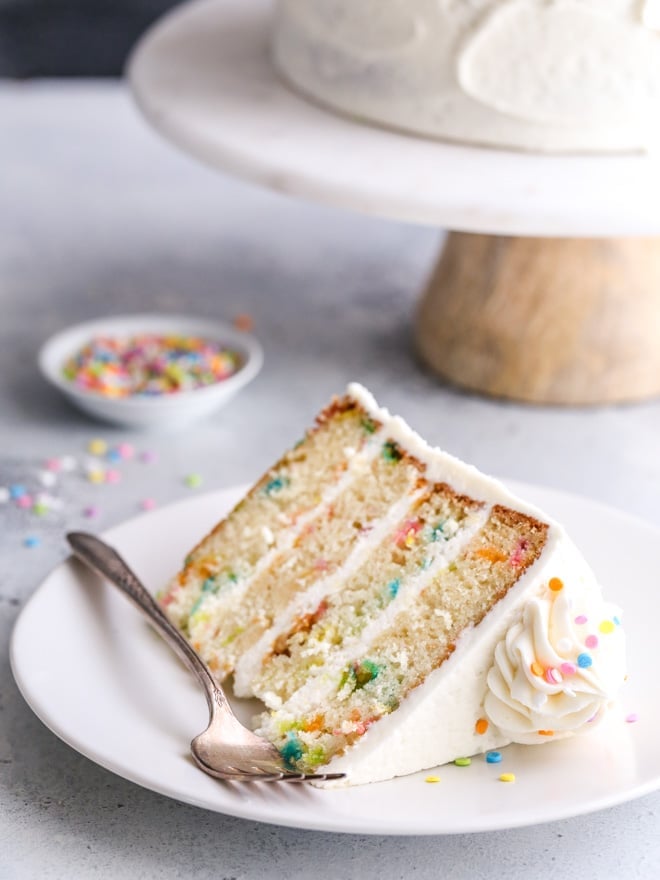
When should you bake with salted vs. unsalted butter? Conventional baking wisdom says to use unsalted butter because you have more control over the amount of salt in a recipe, and salt amounts in salted butter vary from brand to brand. It’s like a blank slate!
While this may be true, I have personally found that salted butter works just fine without a noticeable difference most of the time. In fact I actually prefer to use it in recipes where I want a little boost of extra flavor and sweet and salty-ness— like cookies, caramel and rice krispie treats.
The bottom line? Use what you already have! And if you’re unsure about using salted butter in a recipe that specifically requires unsalted butter, play it safe and reduce the salt amount in the recipe by one half if you like.
What is European-Style Butter? Traditional butter in American has a fat content around 80%, but European-style butter from brands such as Kerrygold have a higher fat content, 82% or more. That might not sound like much, but 2% can make a big difference! In recipes where butter is the star, this can have a big impact on flavor, richness and texture.
All of my recipes are tested with American-style butter with great results, but if you want an extra oomph, consider upgrading to European-style butter! Try my brown butter shortbread, classic fudge brownies, or buttermilk pie crust recipes and see if you can taste a difference.
Butter’s role in baking recipes
So exactly what is butter’s job in recipes, and why it is such a widely-used and important ingredient? Butter has 3 main purposes:
- It brings big flavor to desserts and other baked treats
- It creates texture and affects rise
- It helps with browning and caramelization
Enhances flavor
It should come as no surprise that butter is all about flavor! Yes, butter brings a lot of richness, but it also has a unique flavor that enhances sweetness and lends itself to all sorts of desserts and baked goods. Think about butter in comparison to using olive oil— olive oil has a strong flavor that can overpower some recipes. Or, butter in comparison to vegetable shortening or vegetable oil— it simply tastes so much better!
Butter’s low melting point means it softens right at body temperature, creating a rich, velvety and flavorful “mouthfeel”. It’s satisfying and pleasing, and not at all greasy or waxy like with some other fats.
Creates texture
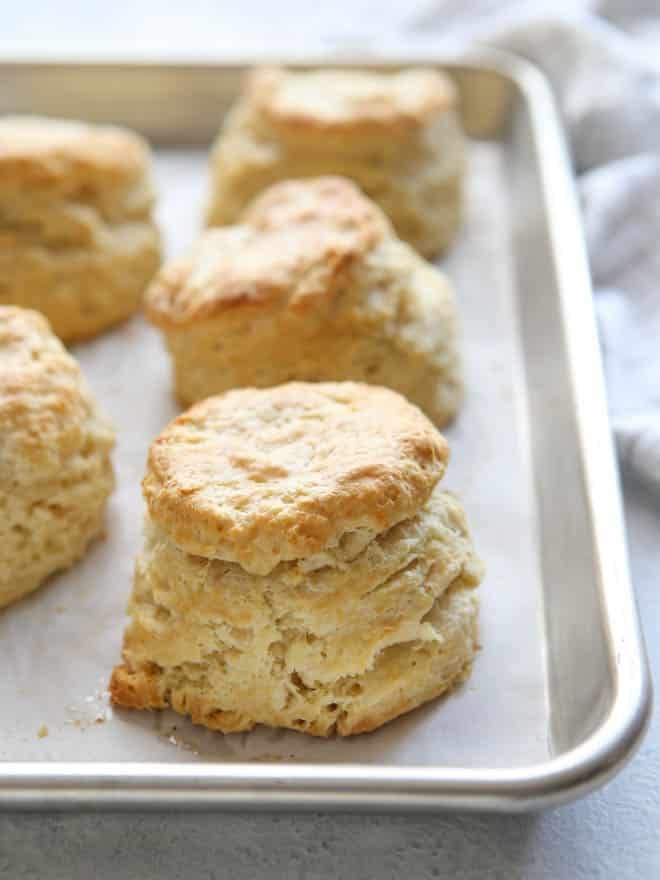
How butter is incorporated into a recipe has a big impact on the overall texture and rise of the end result. Creaming room temperature butter together with sugar creates tiny bubbles of air that creates lift in cakes and cookies. Whereas cold butter into flour creates pockets of air that produces flaky layers in biscuits and pastry. (More on the science behind butter temperature below!)
Helps with caramelization
Butter plays a special role in browning because it’s not just fat—it also contains milk solids (which are made up of proteins and sugars). When you bake with butter, those milk solids caramelize and deepen the color and flavor, creating that perfect golden crust.
Other fats don’t brown like this because they’re pure fat, so they can add richness but won’t give you that deliciously complex, toasted flavor.

The science of butter temperature and why it matters
Butter’s temperature can make or break a recipe! Chilled butter is a must for pastries like pies and biscuits. When it’s cold, butter stays solid as you mix it into the dough, creating pockets that turn into flaky layers in the oven. If you use softened or room temperature butter, it will incorporate into the dough and you won’t end up with any flaky layers.
On the other hand, room-temperature butter is key for other recipes like soft, chewy cookies and tender cakes. It blends smoothly with sugar and flour, giving baked goods a softer crumb. But if your recipe calls for room temperature butter and your butter is too soft, it can melt sooner in the oven and your cookies may spread.

“Room temperature” butter is probably cooler than you think; it should actually be between 65-68°F. It should still feel cool to the touch and leave a slight indent when pressed with your finger, but your finger shouldn’t be able to press all the way through. If it’s shiny or melted at all in any spots, it’s too soft. (This is why in my recipes I indicate “room temperature” butter in the ingredients, and not “softened” butter as it’s a little misleading.)
But melted butter does play a role in some recipes and you’ll see it in certain types of cookies, brownies, cakes, muffins and quick bread. It adds moisture and a denser texture to the baked goods, and it also contributes to a chewier consistency.
The bottom line? Pay attention to what the recipe calls for and stick to it! The overall texture of your baked good depends on it.

How to bring butter to room temperature
Obviously, to get butter to room temperature, the easiest thing to do is to let it sit at room temperature. If I know I’ll be doing some baking, I pull what I need out of the fridge an hour or so before I need it. How warm your kitchen is will play a factor, and you’ll need less time on a warm day vs. if your kitchen is colder.

If you need to bring butter to room temperature more quickly, here are some suggestions:
- Cube butter: This increases the surface area, which will speed up the process. The smaller the cubes, the less time required.
- Place butter in a warm place: For example, you can fill a glass bowl with warm water, then dump out the water and invert it over your butter, creating a nice warm environment for the butter to soften in. You can also set it near a warm oven, rotating it as needed.
- Microwave in short bursts: This is always a last resort for me, as butter can go from cold to melted real quick if you’re not careful. Microwave in 5 second bursts, rotating the butter around each time to each side gets equal exposure.
With all of these methods, be careful to not over-soften your butter! It should still feel cool to the touch and leave only a slight indent, and not look shiny or melted at all. If it does, you’re likely better off starting over with cold butter than proceeding with too-soft butter.
How to store butter
- In the fridge: If stored in its original wrapper or an airtight container to prevent it from picking up other fridge odors, butter will keep for up to 3 months.
- In the freezer: Butter should be well-wrapped for storage in the freezer too (I just put the boxes of unopened butter right in as-is) and will keep for 9 months to a year.
Butter does go bad eventually, and it can affect the overall flavor of your baked goods if you use butter that has gone rancid or has freezer burn from being in the freezer too long.
Butter substitutes
If you are looking for alternatives to butter for dietary reasons or preference, there are options! Many recipes use oils such as coconut oil, applesauce, greek yogurt, vegan butter, etc. and produce fabulous, delicious results. However, I am not an expert in using any of these substitutions, and unless stated otherwise, I have not tested my recipes to accommodate them.
If you’d like to use a butter substitute and feel pretty baking-savvy, feel free to try that with my recipes. But when in doubt, try searching for another recipe that was created specifically using another option. For example, google “chocolate chip cookies with coconut oil” or “vegan vanilla cake”.
I’v been a butter fan for many years now.But recently I discovered that oil is pretty good and I use it it for most of my recipes and they turn out exceptionally well as desired.
Meanwhile thanks for your note. It was helpful
Hello, I’m looking around for recipes for Pie crust using Fat from the karakul sheep tail that I’ve rendered . Is it to strong a taste for pie crust? My Lebanese husband says its wonderful for rice.
I’m sorry, I don’t have any experience baking with that kind of fat. Here is the pie crust recipe that I always use: https://www.completelydelicious.com/2014/11/how-to-make-perfectly-flaky-pie-crust.html.
What other functions does fat have in cakes?
it seems like if you read and note down things that you see on your method of making cookie or whatever recipes in and it helps us a lots to find more ways to develop ourselves to profited us in the fuure
It is funny and interesting
I’m loving your baking essential posts! I’m a beginner at baking and I was starting to get really curious about what each ingredient was doing to my cupcakes!! Thank you so much!
Hi Annalise,
I’m somewhat new to baking and have a question about fats. For Easter I would like to make a carrot layer cake, A lot of the recipes I have found use canola oil. I would really like to sub that with butter and use the creaming method. I have done this in bundt cakes and cupcakes before and it was successful. However, this is my first layer cake and it requires a bit more fat than in the bundt/cupcakes recipes. I was wondering if the cake might be too dense if I sub the oil for butter.
Thanks!
Hi Lauren, thanks for the comment! It’s hard to know for sure what the end product will be without looking at the recipe and trying it myself. I think you are okay to go ahead and sub all butter for the oil. If you’re worried about it being too dense, you could leave out a few tablespoons. Good luck!
what about coconut oil??? it is awesome!!!! a mid chain fat that is solid a room temp, unless you live with no ac in the summer!.. works great in baking..
i have used it cakes and shortbread cookies… yum yum…. even fondant…
can u olso gv information on why eggs are used?
About pudding mix in chocolate chip cookies. What, besides sugar and a thickener, would it add, resulting in a “cakey” texture? And, I must share my lard story. I was raised on the stuff in the ’50s and ’60’s by a Puerto Rican mother so not a pot of rice or pan of beans simmered on our stove without spoonfuls of lard and tiny bits of fried fatback for flavor. It was delicious, but we gave it up years ago for the sake of the scale and our arteries. Still, there is nothing like the flavor of a baking powder biscuit made with lard. Love ur blog.
Since I haven’t used pudding mixes in my own baking, I couldn’t say what the affects are. Perhaps another reader can provide an answer? I’ve heard older family members talk about growing up with lard, it’s just so interesting that no one uses it now.
When making chocolate chip cookies, I like to use half butter (for flavor) and half crisco. I think it keeps my cookies from falling flat – a problem I had before the blend. I also have another secret ingredient – a box of vanilla pudding!
Thanks for all the information. I like to find out about the whys of baking and ingredients. I just wish someone could draw me a picture of these gluten bonds and whatnot! I’m more of a visual learner 🙂
I’ve often used half butter, half shortening for cookies as it definitely helps keep their lovely shape. I’ve never tried vanilla pudding though, may have to look into that.
Two things that can’t be separated from Indonesia cooking: Shortening and butter. We use shortening a lot for cooking- stir fry + rice, and butter for bread and bakery. I am not sure about lard…I have barely heard lard…though my professor mentioned about lard that used for cooking oil way back in the 60’s
On thing that is super guilty pleasure: Valveeta Cheese……
Thanks for this informational post ~ I was planning on writing a post on this very topic when someone asked me about using butter/margarine/oil/shortening interchangeably. I’ll definitely include a link to your post when I get it up!
It´s funny,
last weekend I watched the film “The Help”. It´s just comming up in Germany. And I remember a woman saying: Crisco is the one for everything! For skin, for baking, for noisy doors 🙂
Your blog is so great! I love looking around and beeing inspired:-)
Thanks a lot!
My Hubby just asked a question that you did not address here. What exactly is a butter/canola oil blend and can it be used just as plain butter would? Thank you for this primer; definitely explained all.
Patricia, thank you for your comment!
A blended butter with canola or another oil is exactly what it sounds like. Butter is blended with an oil so that it will stay spreadable cold and straight out of the fridge. You can get away with using it interchangeably in cooking, but I wouldn’t use it as a substitute for butter in baking without making some adjustments.