

How to Make Pizza at Home: Your Ultimate Guide
Master homemade pizza with this ultimate guide! Learn about pizza dough, shaping the crust, the best pizza toppings, different cooking methods, and essential tools needed to create impressive and delicious pizzas right in your own kitchen.
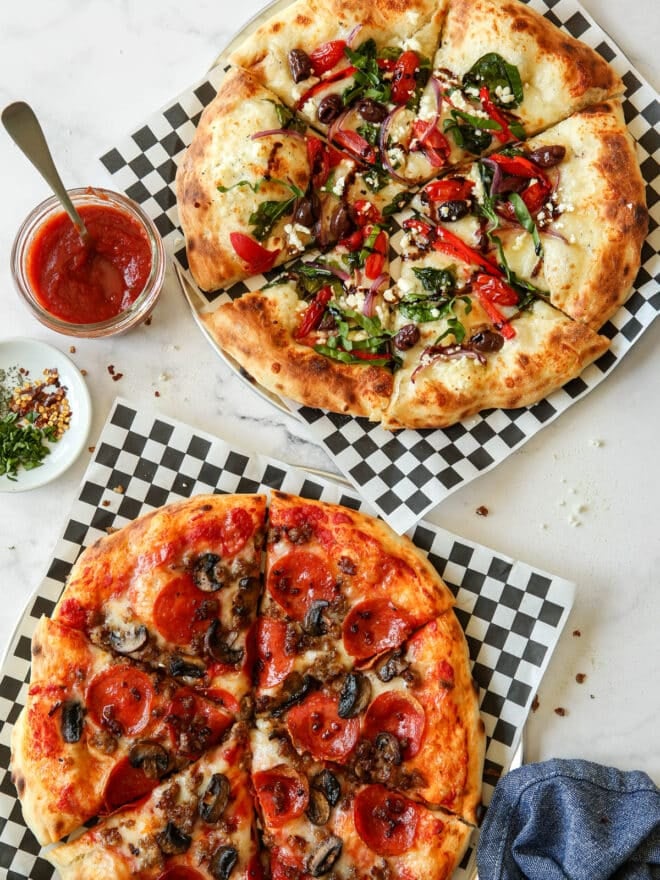
We’ve enjoyed weekly Pizza Nights at our house for over a decade. In fact, some quick math tells me I’ve made close to 1,000 pizzas! I’m not professionally trained, just a home chef with a lot of practice, making really great pizzas at home for my family.
I started making pizza in my oven on a sheet pan, then graduated to a pizza steel, then moved outdoors to a small propane-fired pizza oven, and now have a wood-fired brick oven in my backyard.. I’ve made homemade pizza every which way, and I’m here to pass all my knowledge on to you!
New to making pizza from scratch? Don’t worry, you’ve got this! No special gear or experience needed. I’ll guide you step-by-step, and you can keep it as simple as you like.
How to make homemade pizza
Here’s what we’re going to cover (with links so you can jump to what you need):
- Ways to cook pizza at home
- Essential pizza tools
- Pizza dough basics
- How to shape pizza crust
- Build your perfect pizza
- Serving and storage tips
- My pizza recipes
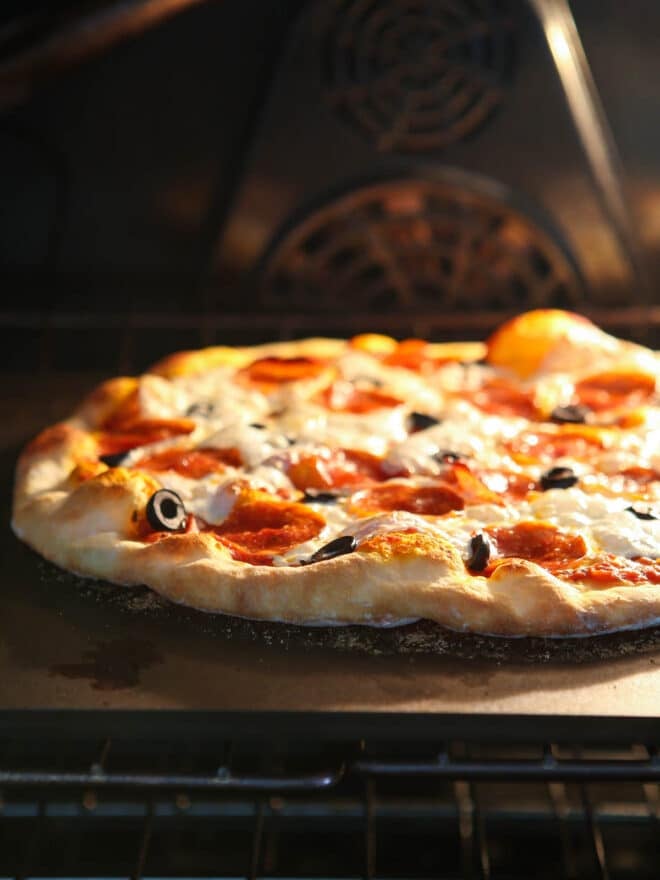
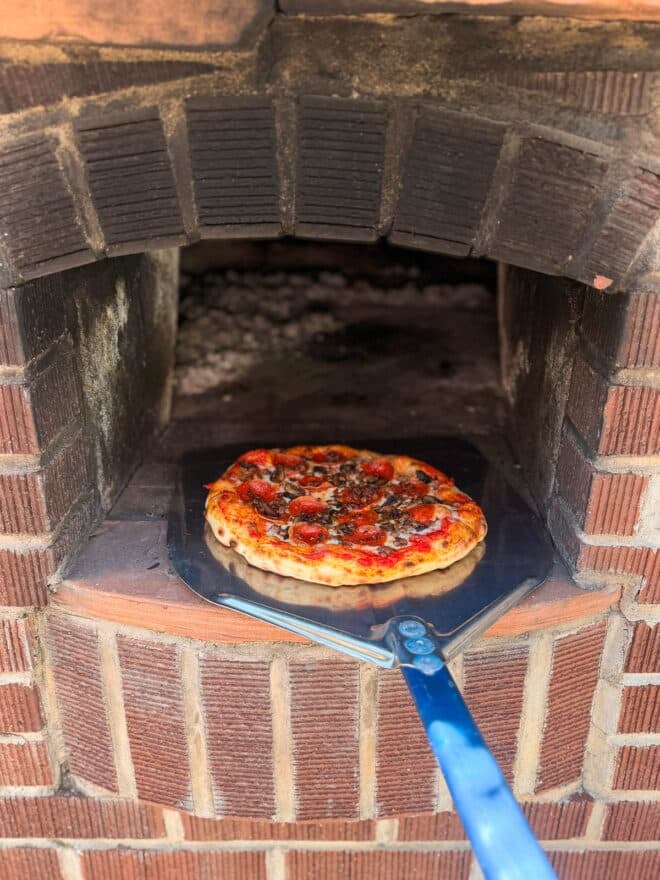
Ways to cook pizza at home
You can either cook pizza in your home oven, or in an outdoor pizza oven. There are pros and cons to each, but you can make great pizza anywhere, regardless of your equipment!
Your home oven is a great place to start
- No special equipment necessary, and an easier learning curve.
- Use a sheet pan, pizza pan, cast iron skillet, pizza stone or pizza steel for different results.
- Temps of 450-500°F are ideal for thinner, crispier pizza crust.
- Produces really delicious pizza!
Level up with an outdoor pizza oven
- Comes with more of a learning curve and bigger investment.
- Lots of options available, from small countertop models, to larger or even built-in ovens. Can be wood-fired, gas or electric.
- Temps of 700-900°F make pizzas with puffy and chewy crusts, and lightly charred edges.
- Produces higher-quality, restaurant-style pizza.
If you’re just getting started: Use your home oven with a pizza steel. It’s a small investment, but it transfers heat really well to produce the most consistent, best results.
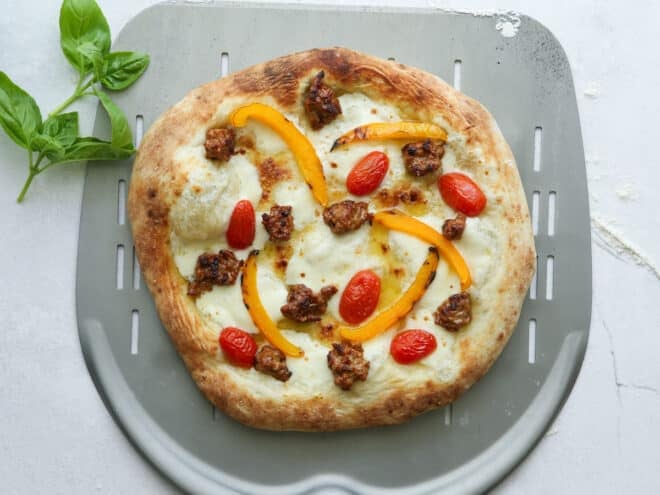
Essential pizza tools
I have a complete list of pizza tools here in a separate post! Which includes all kinds of gadgets, specialty ingredients, and other recommendations. This is more of a quick overview:
- To make and shape the pizza crust: All you really need is a mixing bowl, but a dough whisk, and a bench scraper are handy too.
- To cook pizza: I recommend either a pizza stone or pizza steel if you’re cooking in your oven. A pizza peel is great to have to slide your pizza in and out of the oven.
- To serve pizza: Get a good pizza wheel, and if you want to impress, serve pizzas on pizza trays with wax paper liners.
- Other nice-to-haves: Kitchen scale to measure ingredients, digital thermometer gun, and if you’re ready, I love my Gozney Roccbox pizza oven.
Pizza dough basics
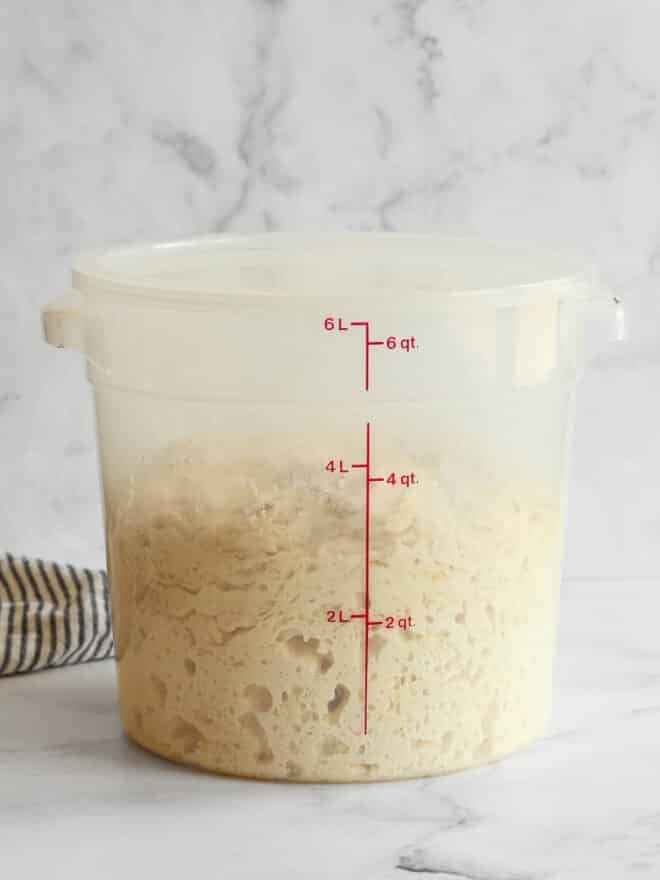
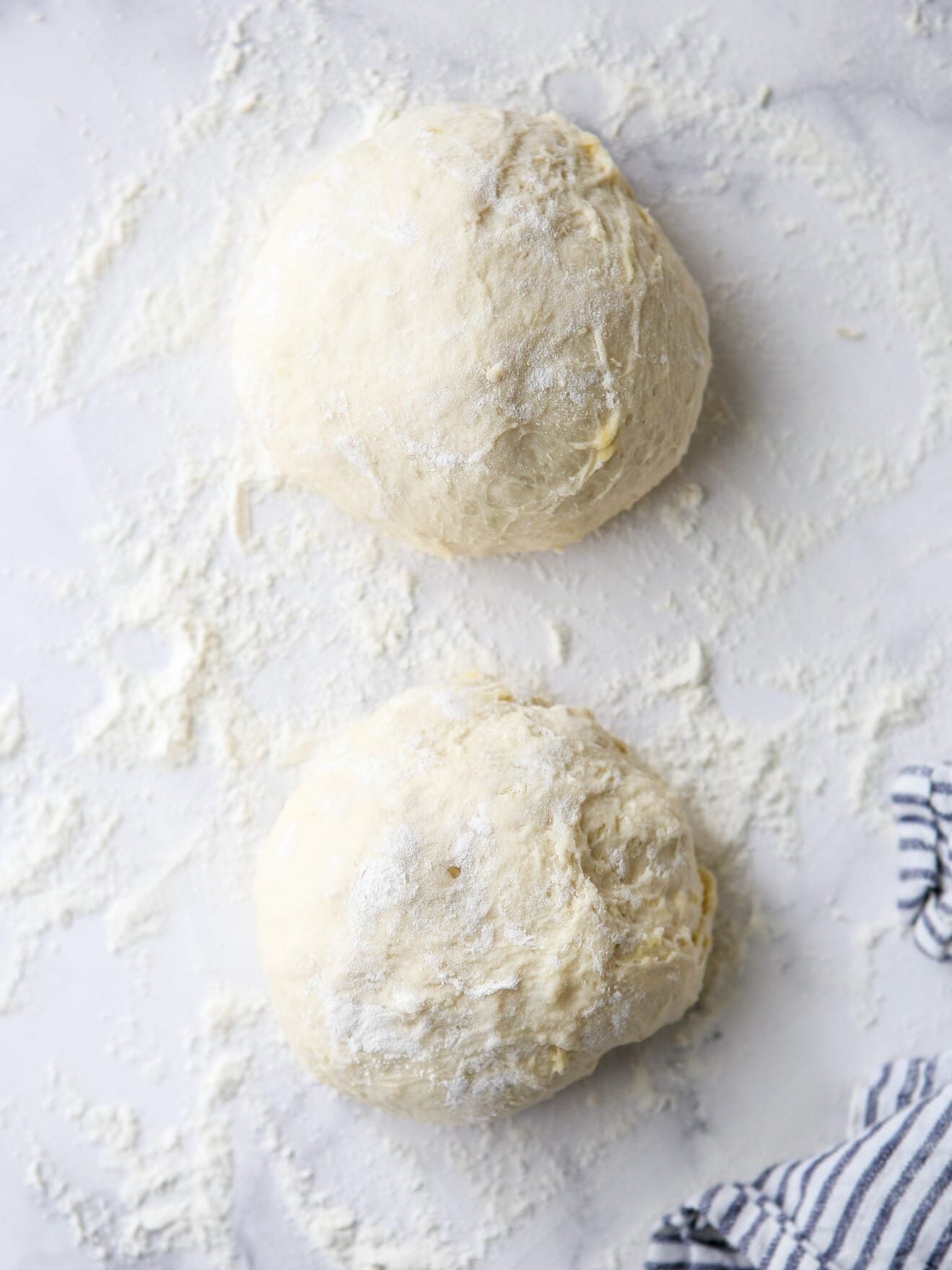
Great pizza starts with great dough! The essential ingredients you’ll need are flour, yeast, salt, olive oil, and water. I also like to add a little honey or sugar to feed the yeast and tenderize the crust, plus garlic powder or herbs if I want an extra flavor boost.
A few key factors affect your dough’s texture and flavor:
- Flour type: All-purpose flour works just fine, but I highly recommend finely milled 00 flour if you’re using a high heat gas or wood-fired oven. It really does make a difference!
- Hydration (water-to-flour ratio): Lower hydration doughs are great for pan and sheet-pan pizzas, while higher hydration doughs create lighter, airier crusts ideal for hotter ovens.
- Fermentation time (rise time): Letting your dough rise longer (even overnight in the fridge) enhances flavor and improves texture by allowing the yeast to work slowly.
What dough recipe should you use? I developed my Basic Homemade Pizza Dough years ago, and it still works great for oven-baked pizza. These days, I prefer my easy No-Knead Pizza Dough for all pizzas no matter how or where I cook it. Its higher hydration creates a bubblier, lighter, and chewier crust.
Building your perfect pizza
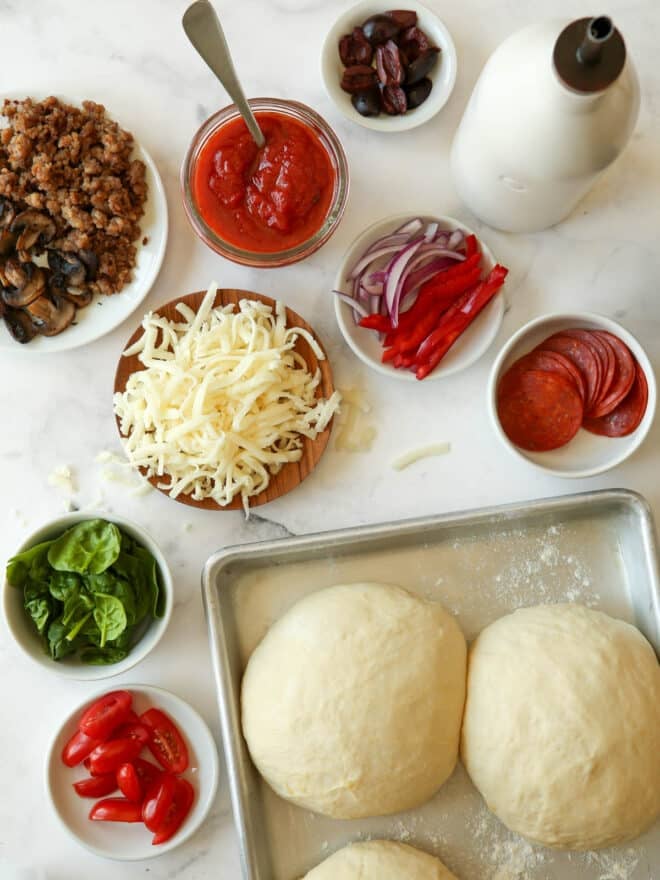
Now that you’ve got your tools squared away and your dough ready to go, let’s make some pizza! Keep reading to see how to roll and shape pizza crust, sauce and cheese options, how to choose pizza toppings, and more.
How to shape pizza crust
If you’re new to shaping pizza: The easiest way to shape dough for pizza crust is to use a rolling pin. I did this for years!
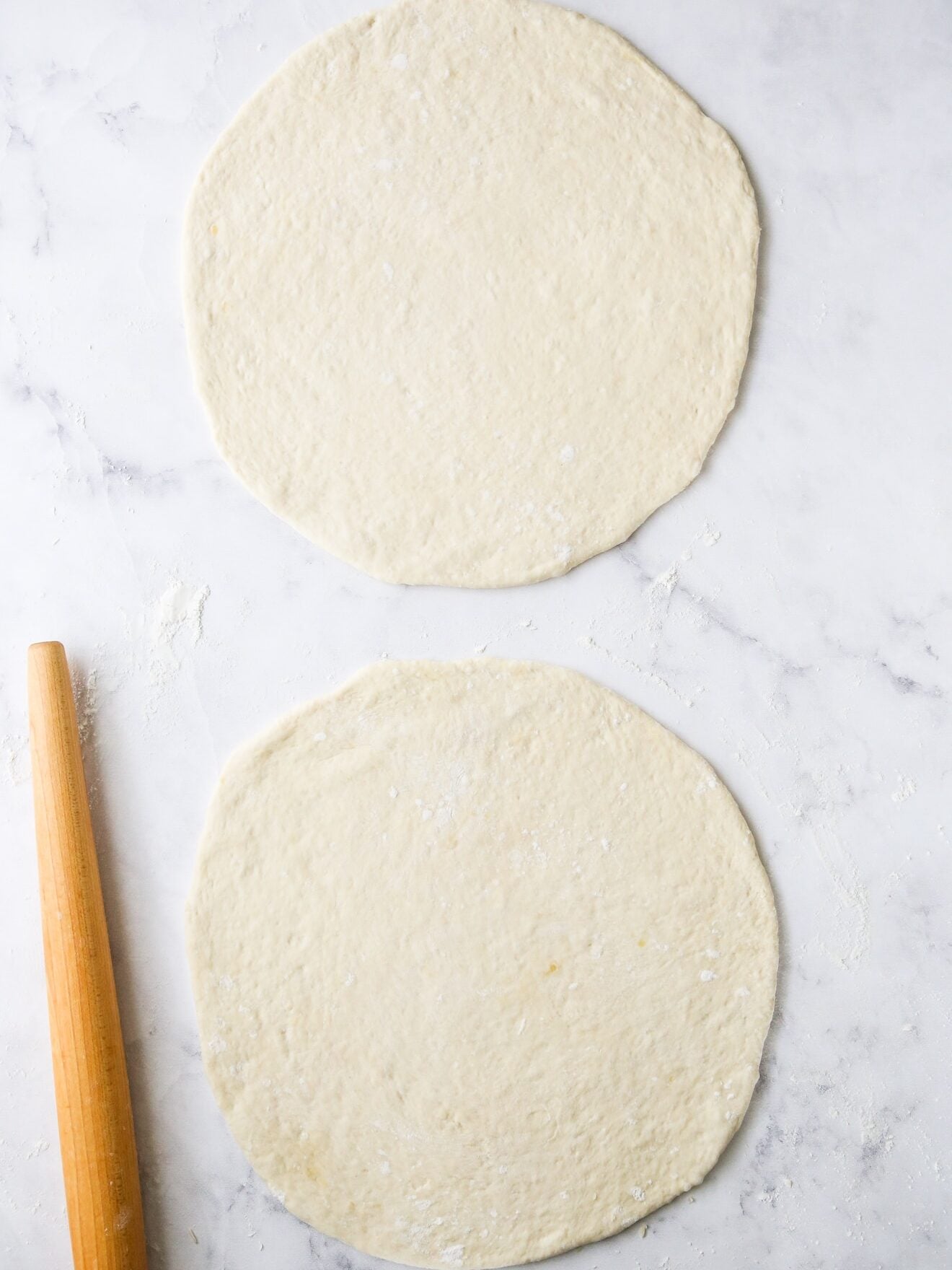
If you’re ready to level up your pizza-making, you can either:
- Press from the center outward gently with your fingertips, with dough on a lightly floured surface.
- Stretch it outward with your knuckles, draping the dough over your hands and letting gravity help it along.
I usually do a combination of both of the above tactics— getting it started on my countertop with my fingertips, then lifting it up to finish stretching with my knuckles.
A few extra tips for shaping pizza dough:
- If the dough resists stretching or rolling, let it rest for 5-10 minutes to relax the gluten before trying again.
- Leave a slightly thicker edge for the crust.
- Handle carefully to avoid any tears.
- Once dough is shaped, lay it flat on a well-floured surface (or one dusted with a little semolina flour) so it’s easy to slide off the counter.
- Or place it on a sheet of parchment paper for easiest sliding in and out of kitchen oven (do not use in ovens over 500°F).
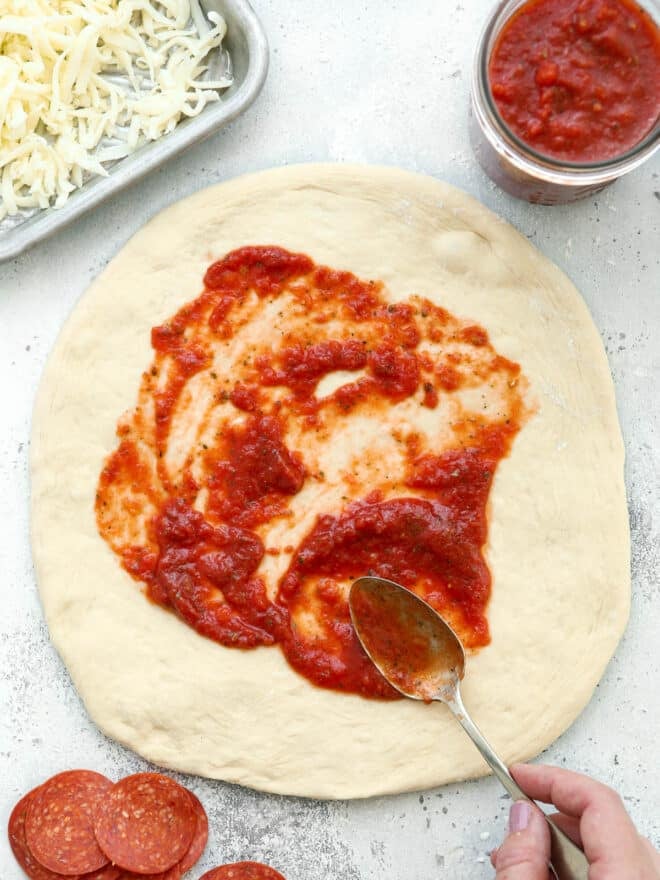
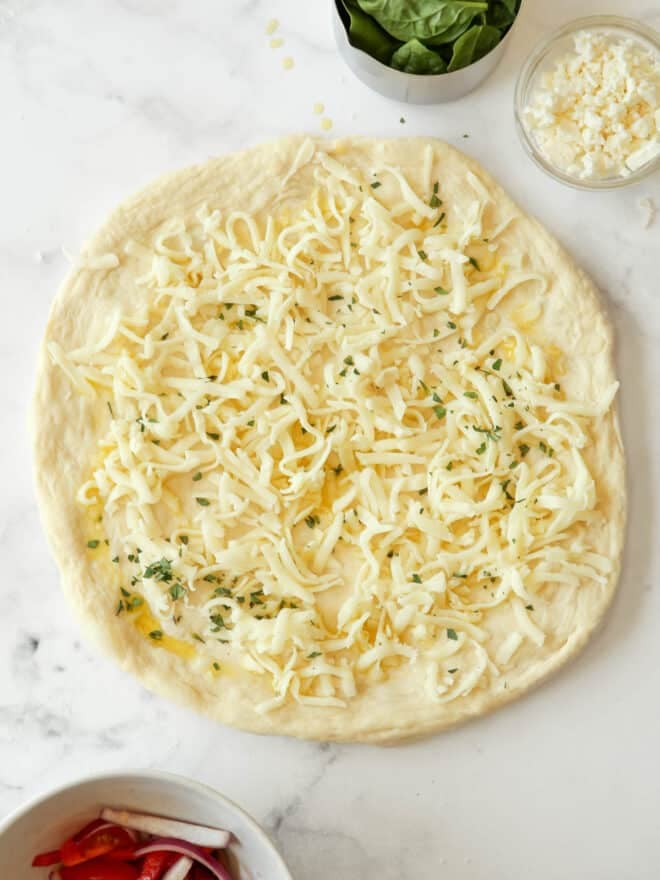
Add sauce and cheese
- Store-bought sauce is fine, but homemade pizza sauce is better!
- Olive oil, pesto, white sauce, and BBQ sauce are other options.
- Whole milk low-moisture mozzarella (that I shred myself from a block) is my favorite for pizza because it melts evenly with great flavor, and doesn’t add extra moisture.
- Fresh mozzarella is fine too, just don’t add too much.
- Parmesan, feta, gorgonzola or fontina work great as secondary cheeses to use with mozzarella to add flavor.

Choose your pizza toppings
Now we get to the fun part— pizza toppings! The options are endless, and you can use pretty much whatever you want based on your preferences or the “kind” of pizza you’re building.
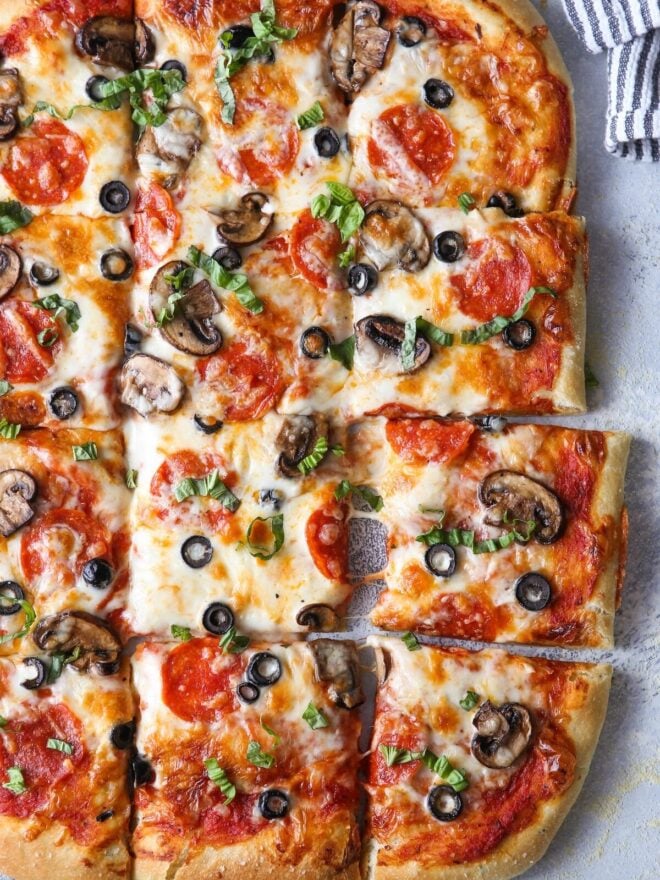
Just don’t overload your pizza! Too many toppings can weigh down the crust, creating a soggier pizza. Aim for 3-5 toppings, about 1 cup total for a 12-inch pizza. Things like:
- Meats: Pepperoni, cooked sausage, ham, Canadian bacon, prosciutto, bacon.
- Veggies: Onions, mushrooms, peppers, tomatoes, olives, corn, zucchini, jalapenos, garlic.
- Herbs and greens: Spinach, kale, basil, chives, rosemary.
Pro tip: Since pizza cooks quickly, it’s important that all meat toppings are cooked thoroughly, cured, or otherwise ready to eat. You can also pre-cook vegetables that benefit from a longer cook time, such as mushrooms.
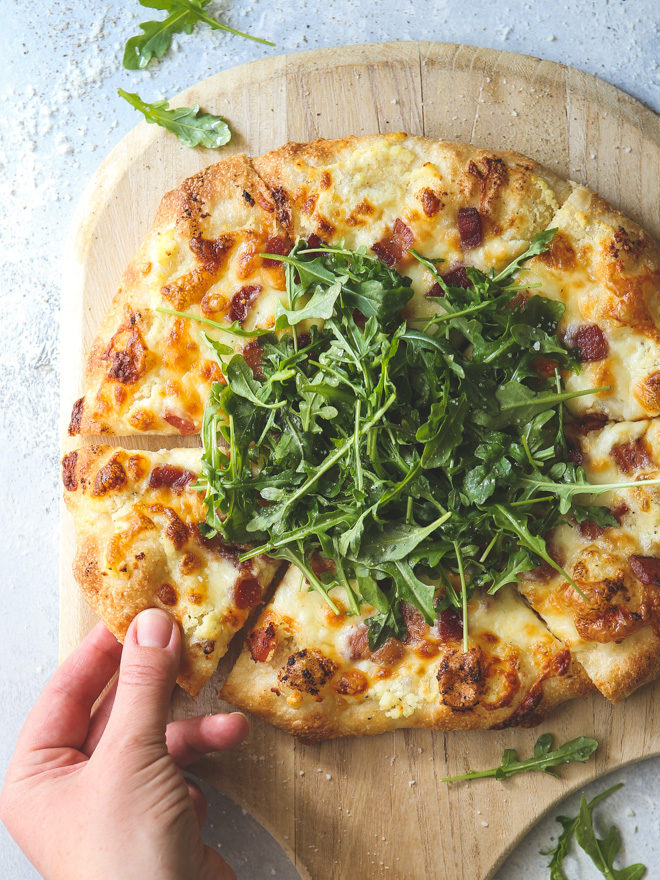
Top your pizza with a finisher
Want to take your homemade pizza to the next level? Add a final topping or garnish to the cooked pizza for a flavor and/or texture boost:
- Herbs and greens like fresh basil or arugula
- Olive oil
- Balsamic glaze
- Honey or hot honey
- Finishing/flaky salt
- Coarse black pepper
- Burrata or ricotta cheese

Pizza serving and storage tips
- For freshest results, serve pizza immediately, or within 15 minutes of cooking.
- If you need to hold a pizza longer before serving, keep in a warm oven directly on the oven racks (this keeps the crust from getting soggy). Serve ASAP.
- Keep pizza leftovers in an airtight container in the fridge for up to 5 days.
- The best way to reheat cold pizza: toast in an air fryer for a few minutes, or microwave for a few seconds to remove the chill, then toast in a hot cast iron skillet for 1-2 minutes.
My pizza recipes
- Sheet Pan Pizza
- Zucchini Corn Pizza
- White Pizza with Bacon and Arugula
- Italian Sausage Pizza with Peppers, Tomatoes and Basil
- Raspberry Brie Dessert Pizza
Ready to make your first (or next!) homemade pizza? Grab your favorite ingredients, have fun with the process, and don’t be afraid to experiment. Pizza night is a delicious way to be creative!
If you found this guide helpful, please share it with your fellow pizza lovers. Let me know how your pizza turns out in the comments below or tag me in your pizza photos on Instagram @completelydelicious.