

The Science of Flour in Baking
The more you know about the science of baking, the better baker you’ll be, and the more delicious treats you can enjoy! Today we’re talking all about the science of flour in baking— why we use it, and its function in baking and dessert recipes.

Flour seems simple enough. We use it all the time in baking and in fact, traditional baking recipes without flour are somewhat in the minority. But do you really know what flour is and why we use it?
It’s more than just a “base” for forming dough. It’s a complex mix of proteins, starches, enzymes, lipids, etc., and the way bakers manage that complexity is what makes magic in the oven. Come learn how flour affects breads, cookies, cakes, pastries and more!
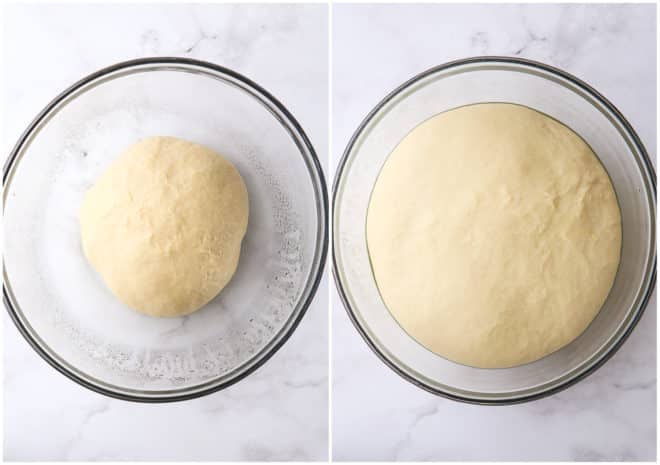
What is flour?
When we think of “flour” generally we think of wheat flour, which is flour milled from the berry of the wheat grain (but we’ll get to other types of flours, too). And understanding what makes up the wheat berry helps us understand how it works in our baked goods.
The wheat berry, or kernel, is composed of three parts:
- The outer layer is known as the bran. It’s tough and fibrous, but it’s also where most of the fiber, vitamins and minerals live.
- Inside is the endosperm, which comprises most of the kernel and holds all of the starches and proteins.
- The germ is the inner embryo of a wheat kernel (It’s what will germinate, or grow into a new wheat plant.) and its composed largely of lipids, or fat.
Traditional white flour is made by grinding only the endosperm into a fine powder. Whole wheat flour is made from the entire kernel— the bran, endosperm, and germ.
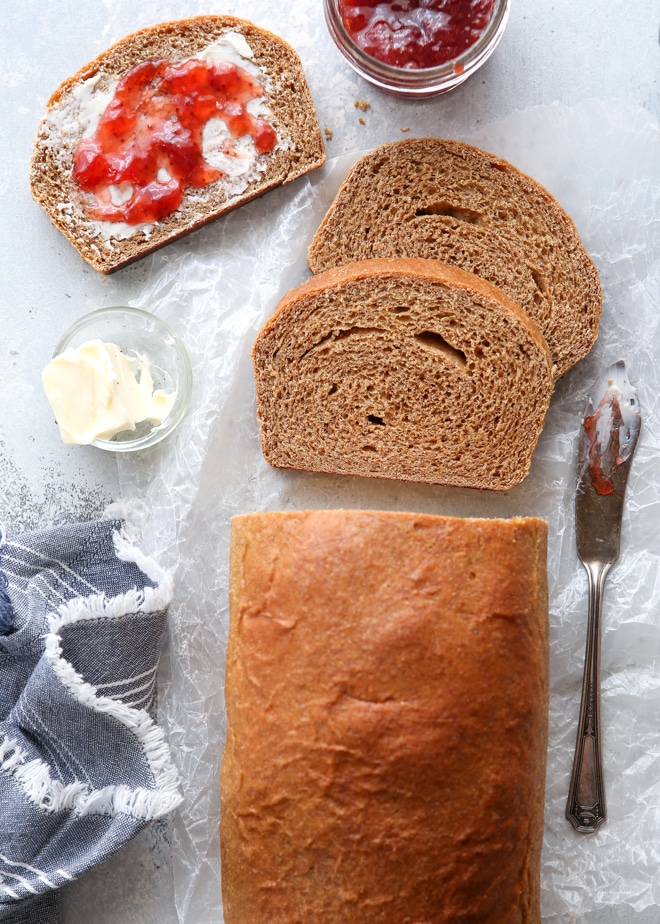
How and why we use flour in baking
Flour’s protein, starches, enzymes, vitamins, minerals, fat, etc. all play a role in baked goods. Most importantly, the proteins are responsible for volume, texture, and appearance, and the starches hold it in place even after it’s removed from the heat. And everything else generally affects flavor and nutrition.
Gluten-forming proteins create rise
It’s the proteins (specifically “glutenin” and “gliadin”) found within the flour that makes it so important to baking. When mixed with moisture these proteins create gluten, something we’ve all heard of.
Flour itself doesn’t actually contain any gluten, but dough does. Gluten is a byproduct of flour combined with moisture. The gluten bonds in dough trap gases from yeast fermentation or chemical leaveners (like baking powder and baking soda) and create rise.
Gluten development is determined by mixing time and presence of fat in the dough. The longer a dough is mixed before baking, the more time the gluten bonds have had to form. Fat works to inhibit the strength of gluten because it coats the proteins and weakens the bond it forms within a baked good.
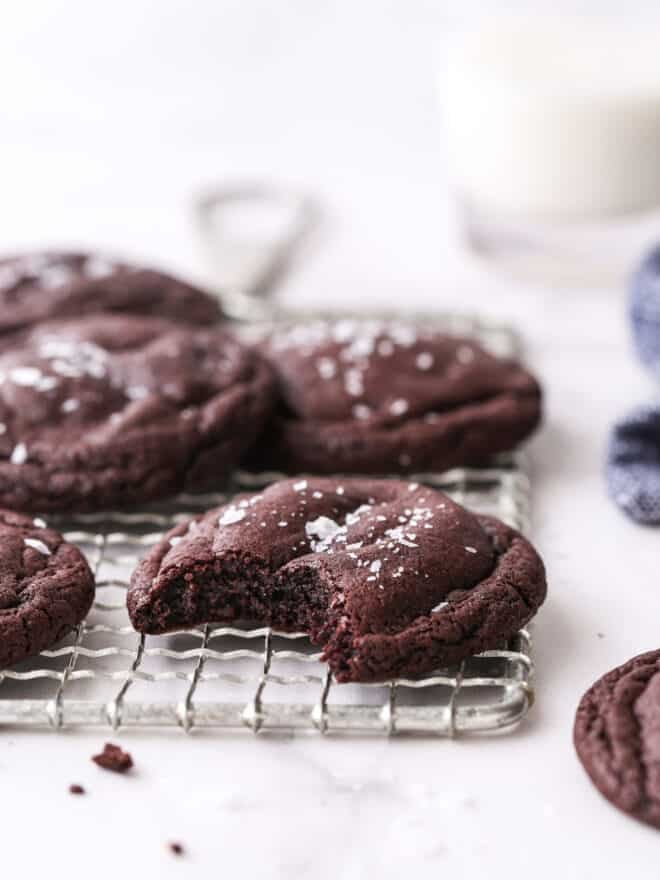
Think about a loaf of bread versus a cookie or cake: We knead yeast dough so its gluten is strong enough to trap gases and make the bread rise high in the oven. But we try very hard not to overmix cookie dough and cake batter because we want a more light and tender end product. Also, most yeast recipes don’t have a high fat content, while cakes and cookies do.
Starches set structure
Gluten-forming proteins may get the most attention, but starches actually make up most of the composition in flour. Most importantly, starches work to absorb the moisture during baking and set the finished product through a process called gelatinization. This happens at temperatures above 140°F.
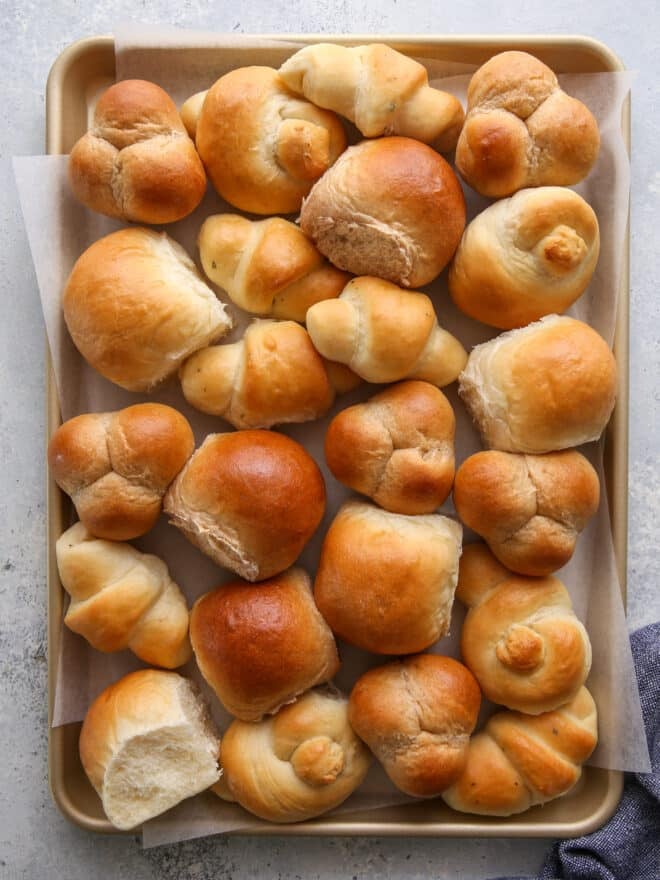
Different types of flour
Wheat flour is categorized by its protein content and intended use. Here are the most common examples so you can compare them side by side:
| Flour Type | Protein Range* | Best Uses | Notes |
|---|---|---|---|
| Bread flour | 12-15% | Yeast breads | High gluten strength |
| All-purpose flour | 10-12% | General baking | A good balance for all types of baking. |
| Self-rising flour | 10-12% | Shortcut for easier baking | All-purpose flour with salt and baking powder included |
| Cake / pastry flour | 6-9% | Cakes, biscuits, pastries | Low gluten strength so baked goods have a tender, fine crumb |
| Whole-wheat flour | 13-14% | Whole grain breads, added flavor/fiber | High gluten power, but bran and germ inhibit gluten network. Needs more moisture and/or rise time |
| High-gluten flours | 14% | Pizza dough, bagels, enriched breads | Very strong network, can handle long fermentation |
| Gluten-free flour & blends | Varies | Gluten-free breads, cakes, cookies | Use starches, gums, enzymes, hydrocolloids, etc. to mimic gluten |
*Exact protein content will vary based on factors like brand you use, its milling process, the region the wheat came from, etc.

Non-wheat flours
“Flour” can be made from many other types of grains and from many other foods as well. Examples include spelt, einkorn, kamut, rye, buckwheat, teff, sorghum, chickpea, rice, corn, almond, etc.
Many lack gluten-forming proteins or have different protein structures, so they require blending with wheat flour or other adjustments to work properly.
Bleached vs. unbleached flour
Flours bleach naturally over time through oxidation, and the aging of the flour actually enhances its gluten-forming potential and flour strength. But because it can be a time-consuming process, chemicals are often used instead to simulate the results.
Not only can these chemicals affect the flavor of the flour, but they can also destroy some of its nutritional value. Look for “unbleached” on the label if you want to avoid flours aged with chemicals.
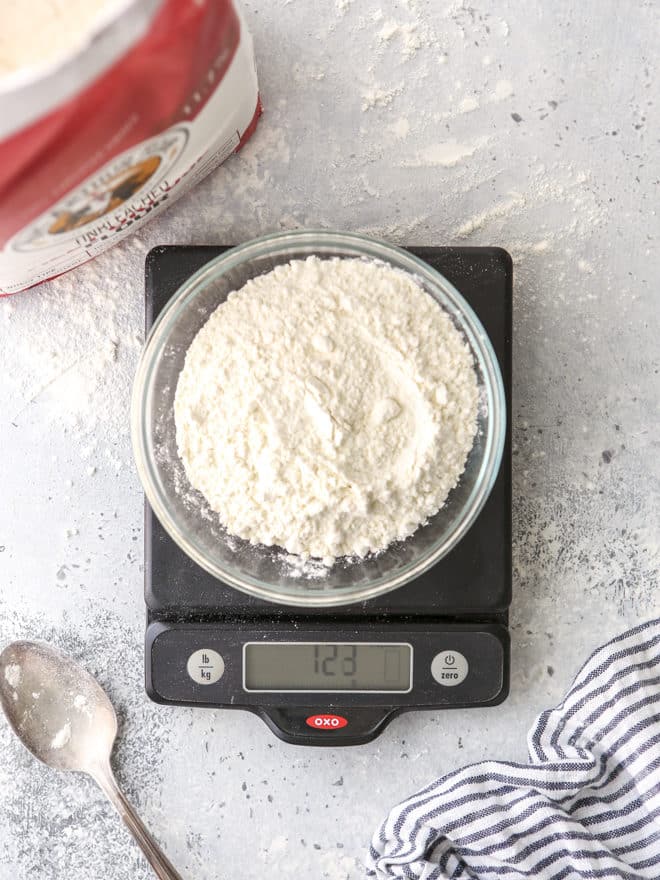
The best kind of flour to use in baking
Most importantly, follow the recipe! It should indicate the right type of flour you’ll need, whether that’s all-purpose, bread flour, cake flour, etc.
When it comes to choosing a specific brand of flour, it’s up to you! And your choice often comes down to a mix of quality, price, and availability. Here’s what I use in my baking:
- King Arthur Baking Company: Known for consistent protein levels and excellent performance, but can be more expensive. (My preferred choice for all-purpose flour and bread flour.)
- Bob’s Red Mill: Offers both traditional wheat flours and a wide variety of specialty and gluten-free flours. You should be able to find it in most grocery stores. (My choice when I need a non-wheat flour.)
- Gold Medal: A budget-friendly option with good consistency, and widely available. (My second choice after King Arthur.)
- Swan’s Down Cake Flour: Look for it next to cake mixes in most grocery stores, it should be easy to find. (My go-to for the most tender cakes. Always use it if a recipe calls for it if you can!).
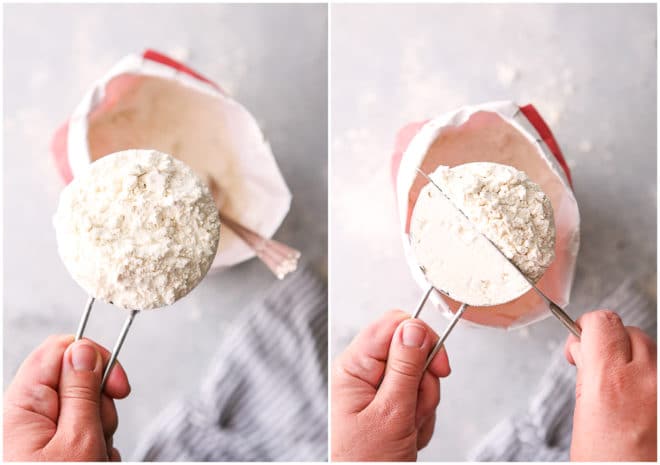
How to measure flour
Baked goods require a specific measurement of flour to turn out correctly, and recipe developers work hard to get the ratio of all ingredients just right! Unfortunately, measuring flour incorrectly is one of the biggest mistakes I see people make.
Click here to learn how to measure flour correctly with the “spoon and sweep” method. Or better yet, get a kitchen scale so you can get the exact right amount every time. All of my baking recipes include both volume (cups) and weight (grams) measurements.
How to store flour
Flour does not have an indefinite shelf life. It can absorb moisture in the air and odors from its surroundings. Its best to store it in an air-tight container in a cool, dry place such as a pantry for a period of up to 6 months. Since whole wheat flour contains fat, it could go rancid and should be refrigerated if storing for more than a few months.
Tip: If flour smells musty or bitter, it’s past its prime and should be discarded.
The takeaway
Flour may look simple, but it’s the foundation of texture, rise, and flavor in baked goods. It plays such a big role! And knowing the differences between flours and how they behave in dough will give you confidence to bake anything and everything!
More reading
If you want to know even more about flour, here are some the resources I used while researching this article:

wooooew
Hey wheat flour is a basic thing it is a basic structural and functional unit of Cookies or bakery products. The texture formation of cookies is due to gluten which is formed when wheat flour is mixed with water. Thanks for providing this information. its really help full
Thanx for all the information. I my self do a lot of baking pastries,bread, Pitzas, cakes etc, etc but without all this knowledge .Great !! Pls. Let me know the ‘Choux ” Pastry recipe for about 2 dozen mediam sized ‘Eclairs” is there a way to make with out so much eggs , thanks
R. W.
Thanks so much! This is a great post – easy to understand. Keep up the good work!
This really helped on my science project 😀
So interesting. Going to read your sugar posts next… Thanks for the information!
Do you use a flour sifter or a sieve?
I use a sieve, one less kitchen gadget to buy!
Thanks! Is it something like the Oxo Stainless Steel Strainer (8″)? Would that work?
Where does whole wheat and regular pastry flour fall on the spectrum. I have read on other blogs that whole wheat pastry flour can be substituted in some recipes for all purpose. Have you tried that or what do you recommend using it for?
WOW!! Fabulous information and I look forward to future posts!!
Love! Thanks for the insight. I had no idea WW flour had fat in it. I should probably toss the stuff I’ve got 😛
I just sent a link to this post to my sister. She was just asking me the other day why to use unbleached flour instead of bleached – I knew I had learned once upon a time why, but I couldn’t remember!
This is great! I was just planning something like this, doing a few posts of lessons on eggs!
Wow, going straight home to put my whole wheat flour in the fridge. Thanks!!
Thank you for doing all the research and allowing us to glean the knowledge through your blog.
One question though; what is ‘white’ whole wheat flour and could it be used as an all purpose flour?
I had never even heard of such a thing, but a little research turned up an answer. It looks like white whole wheat flour is a whole wheat flour made from a naturally occurring albino wheat variety. It has a milder flavor than regular whole wheat flour, more similar to all-purpose flour.
White wheat flour is a simple whet flour which is obtained by simple grinding of wheat grains. If you use white wheat flour the texture of your cookies will be more softer and you will not get a perfect shape of your cookies. While most of the people using Whole Wheat flour only
I love that you’re curious and that you chose to share it with us. I find the science behind the baking fascinating. Great post!