

How to Measure Flour Accurately
Learn how to measure flour using the “spoon and sweep” method for the most success while baking! Because no one wants to waste time and ingredients on a baking fail.
“Baking is a science”, as the saying goes. And it’s true! If you change the proportions of ingredients, sometimes even just a little, things don’t turn out as well. And how you measure flour for your recipe will definitely affect how it turns out.
One of the biggest mistakes I see people make in baking recipes is measuring flour incorrectly, which adds too much flour to your recipes, and can result in dry, dense or tough baked goods. Luckily, it’s a super easy fix! And once you’re in the know you won’t make this simple mistake again.
Does it really matter how you measure flour?
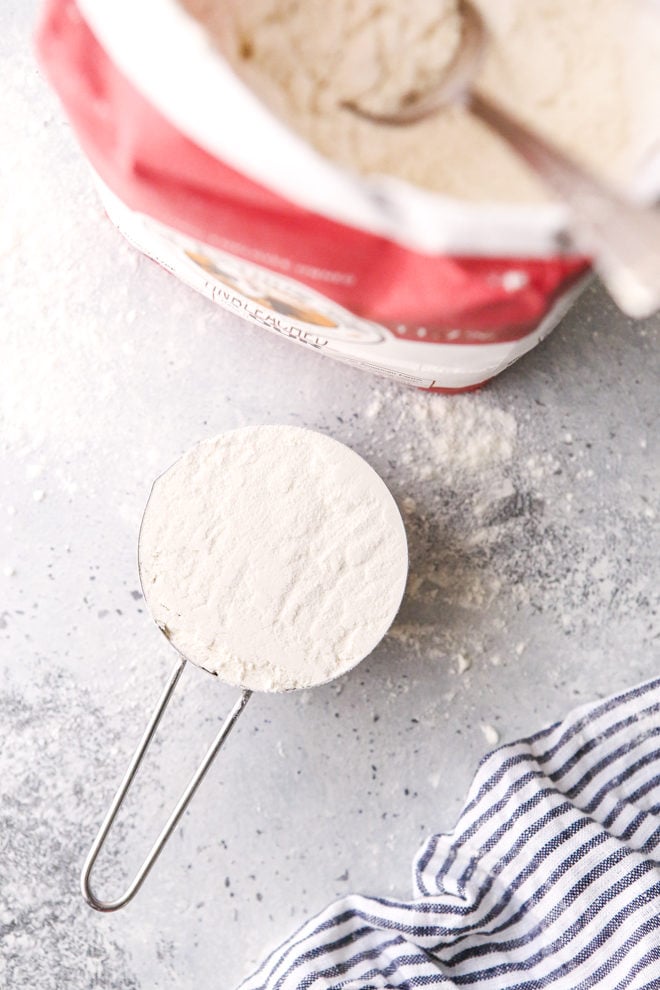
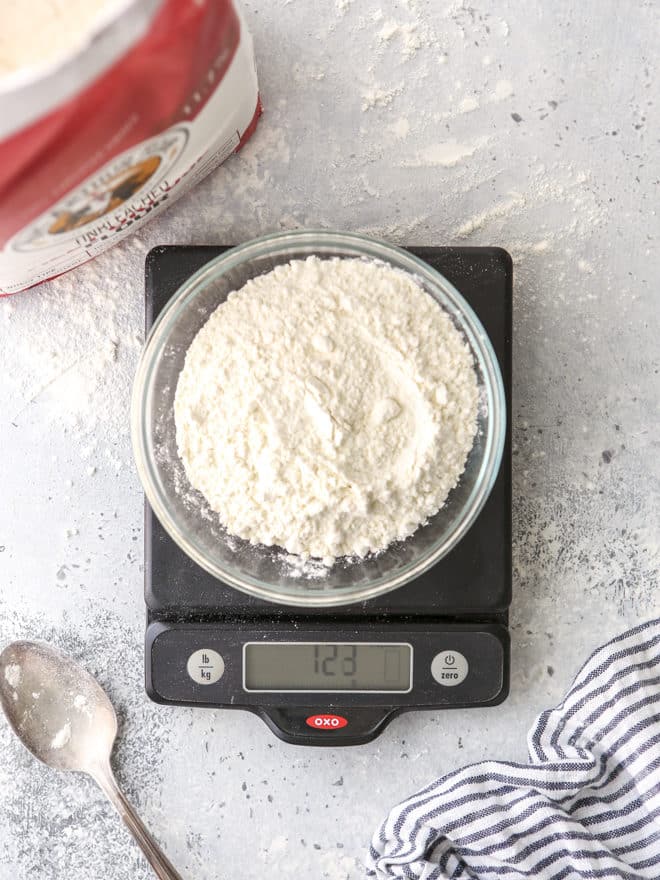
100% yes, it matters! Take a look at the photos below. Both images are of 1 cup of flour, the only difference is how it was measured. And look at how different the weight is! 30 grams extra flour can actually make a BIG difference in whatever you’re making— cookies will be cakey and won’t spread, cakes will be dry and dense, bread will be tough, etc.

Don’t measure flour this way
In the photo above on the left, the flour was measured by dipping the measuring cup directly into the canister, scooping out the flour, and leveling off the top. It came out to 155 grams, which is almost 1/3 cup additional flour!
Why this method doesn’t work: Flour actually settles and compacts over time. As it sits, the flour particles settle and pack together, leading to a denser and more compact measurement when scooped directly from the bag or container.
Use the “spoon and sweep” method to measure flour
Also called the “spoon and level” method (I use both names on this site, but they are the same!).
- Fluff the flour. Use a spoon or measuring cup to fluff and loosen it up inside the container or package. I usually give it 4-5 good “fluffs”.

- Spoon flour into measuring cup. Add flour to your measuring cup one spoonful at a time.
- Fill until measuring cup is overflowing. Continue until the flour is mounded over the rim of the measuring cup.
- Sweep the top. Use a flat edge like the back of a knife to sweep across the top of the measuring cup, letting the excess flour fall back into your flour bag or jar.


Why this method works: Regardless of how long the flour in your container has been sitting (and compacting), fluffing it up incorporates air back into the flour, and then using this spoon and sweep method will give you consistent results every time you use it.
Note: Use this method of measuring flour for all kinds of wheat flour— all-purpose flour, bread flour, cake flour, etc.
Use a digital scale for the most accuracy
Looking for an easy way to take your baking up a notch and get even more consistent results? Use a digital baking scale! The MOST accurate way to measure ingredients is by weight in grams, instead of using volume measurements via measuring cups.

Learn more about weight vs volume measurements here! There you’ll find lots of great nerdy baking info.
Note: Different recipe developers and publications use a slightly different standard for 1 cup of flour. King Arthur Flour, a baking source I trust a lot and have previously used as a guide, has 1 cup of flour = 120 grams. I actually found that number to be very hard to achieve with the spoon and level method (as seen in these photos). My standard for recipes on this website is now 1 cup of flour = 125-130 grams.
I’m slowly updating my recipes to reflect that weight amount, but you can always trust that they have been tested with the spoon and level method.
You’re ready to get baking!
Now that you know how to measure flour like a pro (and what NOT to do), you are set up for all sorts of baking success. Next time you’re in the kitchen, just remember to “spoon and sweep” and see if it makes a difference!

How to Measure Flour Correctly
Ingredients
- All-purpose flour


Instructions
- Use a spoon or measuring cup to fluff and loosen it up inside the container or package. I usually give it 4-5 good “fluffs”.
- Add flour to your measuring cup one spoonful at a time. Continue until the flour is mounded over the rim of the measuring cup.
- Use a flat edge like the back of a knife to sweep across the top of the measuring cup, letting the excess flour fall back into your flour bag or jar.
- 1 cup of all-purpose flour should be between 125-130 grams. For the absolute most accurate and consistent measurements, use a digital scale!

That flour-measuring tip is a baker’s essential—scooping vs. spooning can make all the difference in your final bake!
What about sifting the flour before measuring it?
Sifting flour will also aerate it and give a more accurate measurement, yes!
Love it but need help please
thanks for share sir website and good information
thanku sir share this website visit my website and all service available
Proffessional Web development services Ahmedabadwith a focus on quality, efficiency and professionalism. Our development team has many years of industry experience and are experts in various programming languages and frameworks. We take care of all the boring details so you can focus on what makes your website great
Great tips for how to measure flour.
Blogger at https://thefireflygrill.com/
Thanks for all the baking tips, over time you forget the reasons for some or just forget so refreshing helps
My personal recommendation for this method would be to use a measuring cup, as shown, by overfilling the cup, but then to follow by tapping a knife or spatula along the rim before dragging it across the top. This allows for every pocket of the cup to fill with flour, creating a much more accurate measurement.
Once you have your cup correctly measured out, i recommend verifying your weight with a scale. A cup of all-purpose should actually come out to weighing between 125-130g(imo 120g as you mention is quite inaccurate and if you google this you will find more people stating 1cup=130g).
By doing both steps, this assures you have a perfect amount of flour every time. Also, if your flour has happened to build up a little bit of moisture due to poor storage, than simply using the weight measurements, concludes in a false read due to the change of overall weight in the flour as a whole. By doing this, you can also end up saving the step of using a scale, for when you are following an imperial measurement recipe and don’t want to convert every ingredient, or take out the scale only for the flour.
I hope my extra pointers help.
Happy Baking!!
Definitely an important thing to know!
What kind of scale would you recommend?
Great photos! Those alone without the text will teach you how to measure a cup of flour properly.
Thanks!
I will try this next time I bake!
Yes, these are excellent tips! Lovely blog!
Great tip! Thanks for the info!