
10 Things I Do When Baking a Cake
Years of trial and error in the kitchen have led me here, with 10 cake baking tips to help you create tender cakes, even layers, and stress-free results every time.

I’ve baked a lot of cakes over the years: birthday cakes, wedding cakes, sheet cakes, snack cakes, bundt cakes, etc. The recipes and styles may be very different, but my process is the same. These are the small, consistent habits that make a big difference in how a cake turns out.
None of these tips are complicated, but together they’re the reason my cakes bake evenly, stack beautifully, and taste as good as they look. If you want more reliable results every time you bake a cake, start here!
10 Things I Do When Baking a Cake
Here’s a quick overview of the cake-baking habits I rely on every time. Click any tip below to jump straight to the full explanation, or simply keep scrolling.
- Have dairy and eggs at room temperature
- Use a scale to measure ingredients in grams
- Use salted butter
- Use cake flour when called for
- Sift dry ingredients
- Use light-colored metal pans
- Line pans with parchment paper
- Weigh cake batter in pans for even sized cake layers
- Use a finger press to test for doneness
- Chill cake layers before assembling
Have dairy and eggs at room temperature
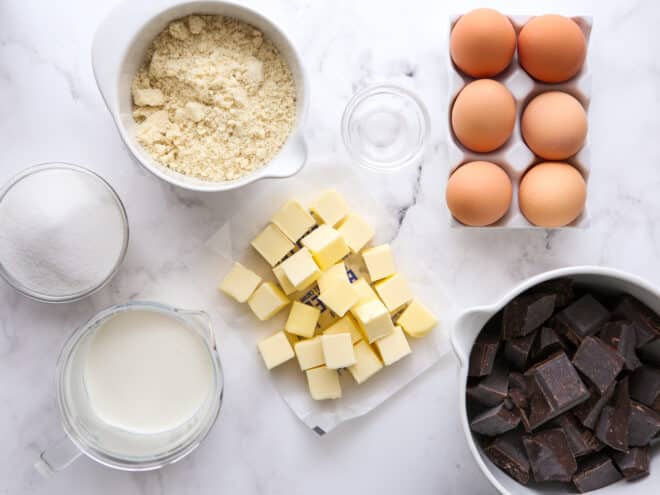
Room-temperature ingredients mix together more easily and smoothly, so you actually need to mix less, which creates a softer, better cake texture. Cold eggs and liquids also lower the temperature of the batter, inhibiting baking and rise once it hits the oven. I pull butter, eggs, and dairy out of the fridge about 30–60 minutes before baking whenever possible.
Tip: Did you forget to pull them out of the fridge? Here’s how to quickly bring butter to room temperature, how to bring cream cheese to room temperature quickly, and why room temperature eggs matter in baking.
Use a scale to measure ingredients in grams
Consistent, accurate measurements are one of the best things you can do to improve your cakes (and baking recipes in general), and you’ll get the most accurate results with a kitchen scale! Cup measurements have too much fluctuation person to person, especially flour, whereas a scale is always the same.
Bonus reasons to use a scale: It’s quicker and easier because all ingredients can go straight into your mixer bowl, there’s less dirty dishes to clean, and there’s less of a chance of a goof-up (“have I added 2 cups or 3?“).

Use salted butter
This is a newer “must” for me, but I now almost always bake exclusively with salted butter instead of unsalted butter. Starting with salted butter means you are already starting with flavor, which helps your cake have better flavor overall. (If your cake recipe also calls for additional salt, don’t skip it, and don’t worry about the cake being overly salty.)
Use cake flour when called for
Cake flour really does make a difference! It has a lower protein content than all-purpose flour, which means less gluten and a softer, finer crumb. If a recipe specifically calls for cake flour, don’t substitute if for all-purpose flour if you can help it.
Tip: If you don’t have cake flour on hand, substitute 3/4 cup + 2 tablespoons of all-purpose flour and 2 tablespoons of cornstarch for 1 cup of cake flour.
Sift dry ingredients
Sifting flour, cocoa powder, and leaveners helps remove lumps and evenly distribute ingredients throughout the batter. It’s a small step, but it helps the batter mix quickly and more evenly, with less stirring required. This leads to lighter cakes and more uniform texture, especially in delicate recipes.
Tip: Place a large mesh strainer over your mixer bowl on top of a kitchen scale. Weigh all your dry ingredients (zeroing out the scale in between each) and sift!
Use light-colored metal pans
The pan you use affects how a cake bakes just as much as the recipe. Light-colored metal pans bake cakes more evenly, while dark pans absorb more heat and can lead to over-browned edges. I also avoid glass or ceramic pans as they don’t conduct heat well.
I highly recommend aluminum Fat Dadio cake pans. Use 8-inch pans for taller cakes and 9-inch pans for wider, shorter cakes.

Line pans with parchment paper
Greasing a pan is good, but greasing and lining it with parchment is better. I always line the bottom of my greased cake pans to guarantee the cake releases cleanly (the only exception is bundt cake pans). There’s nothing worse than a beautiful cake stuck to the pan!
Tip: You can cut parchment rounds from parchment sheets or rolls, but I prefer the ease of pre-cut parchment rounds.
Weigh cake batter in pans for even sized cake layers
Here’s another use for your kitchen scale! I weigh the batter as I divide it between pans to make sure they all have the same amount. This ensures each layer bakes at the same rate and stacks neatly, which gives the cake a more polished look.
Tip: If you know the weight of your mixing bowl you can do some math the determine how much overall batter you have and divide that number by the number of cake pans you’re using. Or you can measure as you go and adjust as needed (I usually start with about 1lb/455grams of batter in each of my pans and go from there).
Use a finger press to test for doneness
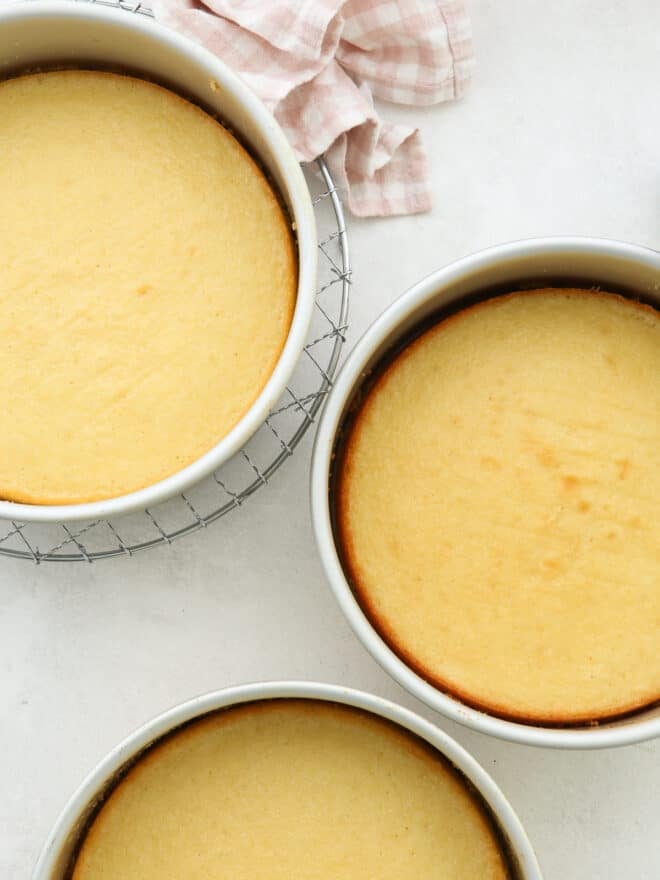
I rarely use a toothpick or even a thermometer. Instead, I look through the oven door to see that the tops appear dry and set, and then I gently tap and press the tops with my finger. If the top feels squishy or presses in too easily, then I know it needs another few minutes. If the cake feels firm and springy beneath my finger, then I know the centers are fully baked and the cake is done.
Chill cake layers before assembling
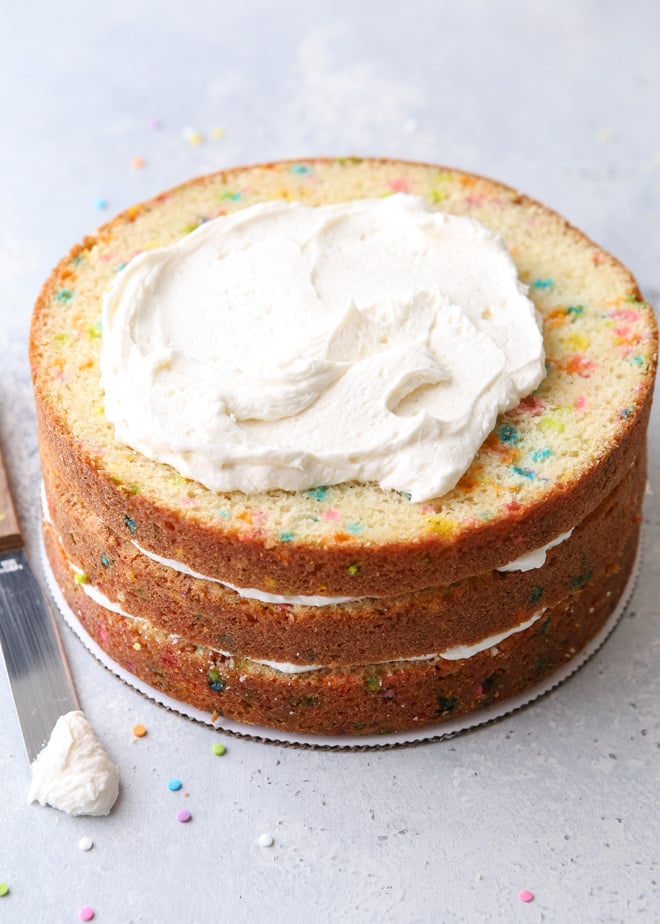
Warm or room-temperature cake layers are fragile and crumb easily. Chilling them makes them sturdier, easier to level, and much easier to frost. Even 30–60 minutes in the fridge can make stacking a cake far less stressful.
More cake help
Ready to get baking? Check out my complete cake recipe archives here!